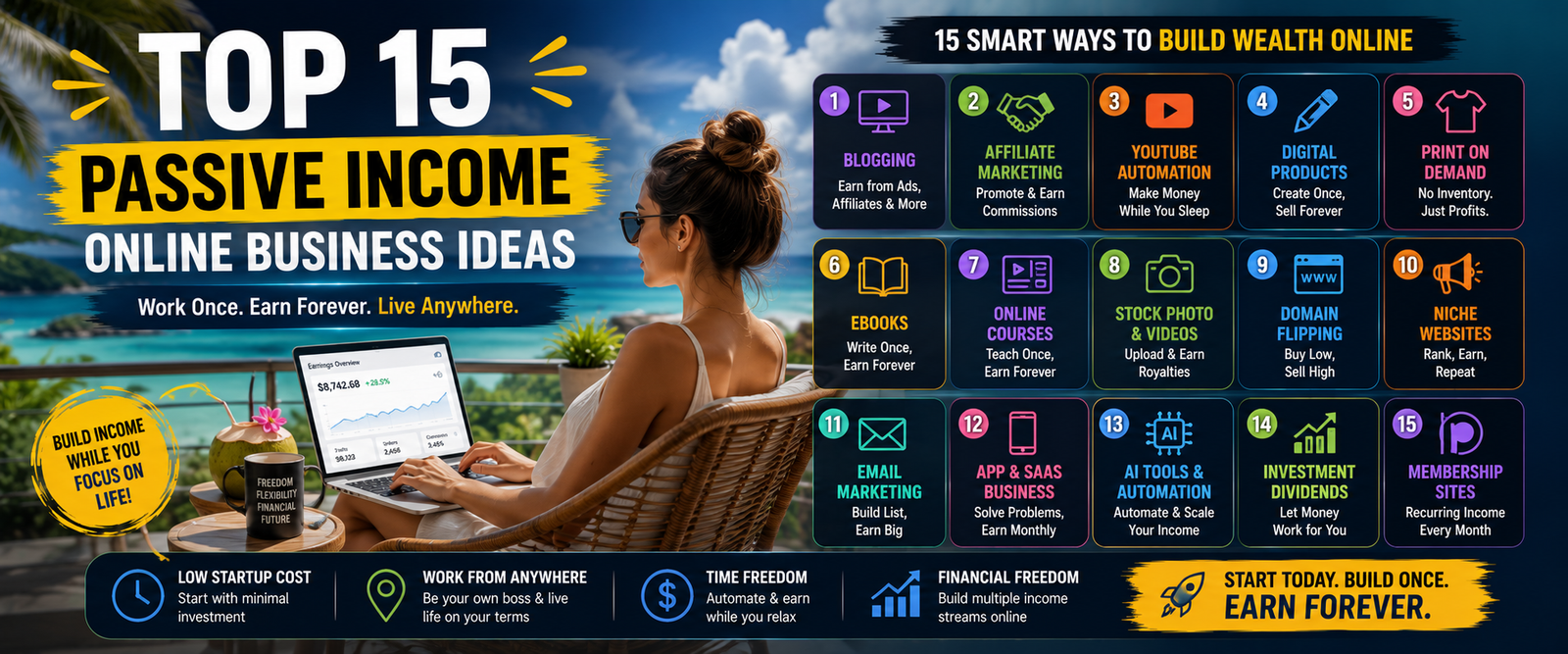
15 Passive Income Business Ideas That Actually Work in 2026
My aunt spent three years writing a single guidebook about houseplant care — genuinely three years, on and off, mostly nights and weekends around her actual job. When she finally published it as an ebook, she figured it might make her back a few hundred dollars for the effort. Four years later, it’s still selling a handful of copies every single week, without her touching it beyond the occasional typo fix. That’s the entire appeal of passive income in one small story: real work upfront, and then a long tail of quiet, ongoing return that keeps paying out long after the effort stopped.
More people are actively searching for ways to earn money without permanently trading their hours for it, and it’s easy to understand why — the traditional trade of “work more hours, earn more money” has an obvious ceiling. Passive income breaks that link, at least partially, letting you earn even during the hours you’re not actively working. The internet has made building these income streams genuinely more accessible than it’s ever been, and a lot of entrepreneurs have built online businesses that keep generating revenue long after the bulk of the initial work is finished.
One honest caveat before we dive in: passive income is never actually instant, and it rarely happens without real effort at the front end. But the right business, built properly, can eventually produce consistent income with a genuinely small amount of ongoing daily effort. Let’s go through the ideas that are actually working right now.
What Passive Income Actually Means
Passive income is money earned with minimal ongoing effort once the initial setup is done. Unlike a traditional job, where your income is directly tied to hours worked, passive income streams keep generating revenue independent of how much time you’re actively putting in on any given day.
Common examples include selling digital products, earning advertising revenue from a blog, collecting affiliate commissions, running online courses, and offering subscription memberships. The important nuance here — one that trips up a lot of beginners — is that “passive” describes the ongoing maintenance, not the initial creation. Almost every genuinely successful passive income business started with a real, often substantial, upfront investment of time and effort before it became passive at all.
Why This Has Become So Accessible Through the Internet
A few structural things about online business make passive income realistic in a way it simply wasn’t a couple of decades ago.
Startup costs are often minimal. Plenty of online businesses can be started with very little money, sometimes close to nothing beyond your own time.
Your market is genuinely global. An online business can reach customers anywhere with an internet connection, rather than being limited to your local area.
Automation does a lot of the heavy lifting. Digital tools increasingly let entire business processes — sales, delivery, even customer support — run on their own.
Scaling doesn’t require proportional cost increases. An online business can grow considerably without needing a matching jump in expenses, unlike a lot of traditional brick-and-mortar models.
Together, these factors make online passive income genuinely attractive whether you’re a total beginner or a seasoned entrepreneur looking to diversify.
1. Blogging
Blogging remains one of the most enduring passive income models out there. Bloggers build content around a specific topic and pull in readers through search engines and social media, and once that traffic starts flowing consistently, income tends to follow through advertising, affiliate marketing, sponsored posts, and direct digital product sales.
Building real traffic takes genuine time and patience — this isn’t a fast path — but successful blogs have a track record of generating income for years after the bulk of the content was written, which makes the early slog worth it for a lot of creators.
2. Affiliate Marketing
Affiliate marketing lets you earn a commission by promoting other companies’ products, earning a cut whenever someone buys through your specific referral link. It works especially well layered on top of blogs, YouTube channels, email newsletters, and social media pages you’re already building.
Because you’re never creating your own product from scratch, this is one of the more approachable passive income models for beginners — your job is really just connecting the right audience to the right product.
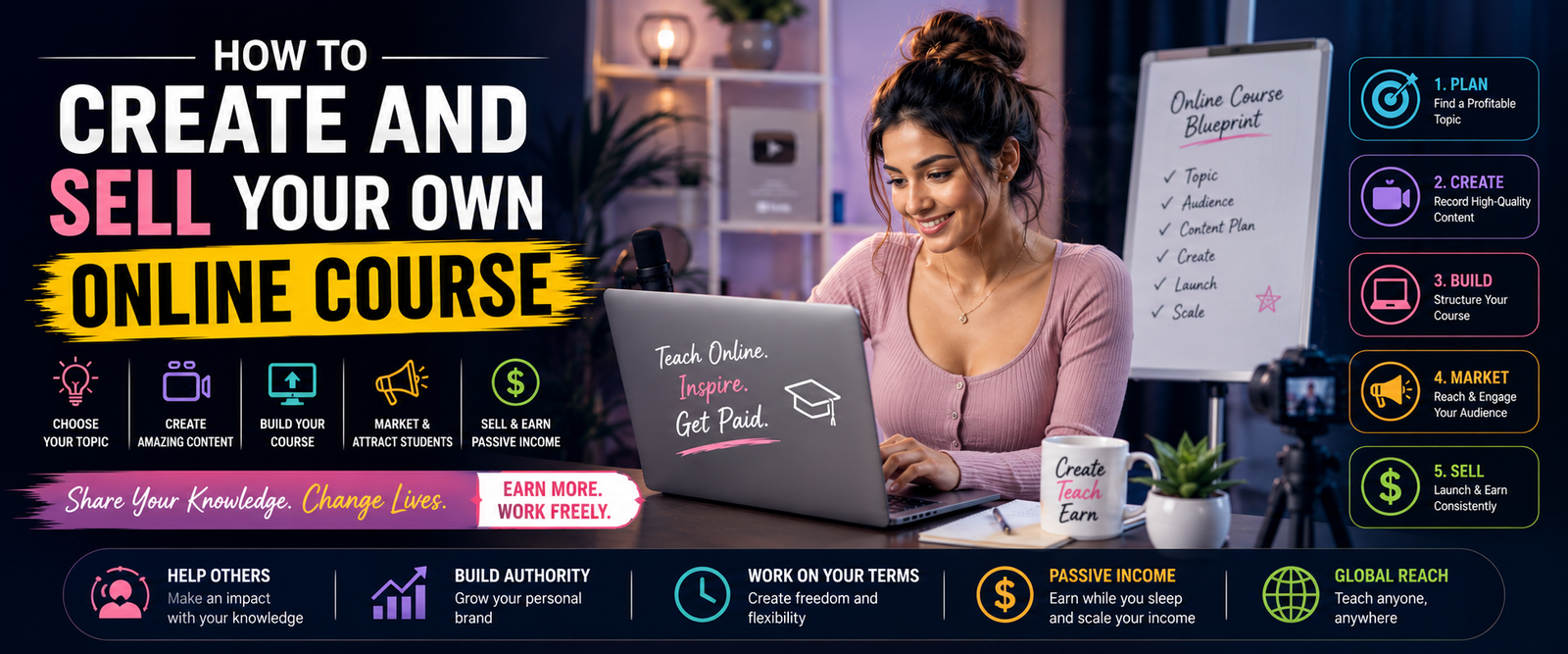
3. Selling Online Courses
Online education keeps growing fast, and if you’ve got genuine expertise in something, packaging it into a course is a legitimate business model on its own. Popular course subjects include programming, digital marketing, graphic design, personal finance, and photography.
Once a course is built, it can be sold repeatedly to students anywhere in the world without needing to be recreated for each new buyer — this is what makes it such an efficient use of your initial time investment.
4. Selling Digital Products
Digital products are among the most scalable passive income opportunities available, precisely because there’s no manufacturing or shipping involved at all. Common examples include ebooks, templates, printables, stock photos, and design resources.
Because there’s no physical production cost eating into each sale, digital products often carry unusually high profit margins compared to anything involving a physical good.
5. YouTube Channel
A YouTube channel can eventually turn into a genuine passive income source through advertising revenue, affiliate marketing woven into video descriptions, sponsorships, and merchandise sales. What makes this especially appealing is that individual videos can keep generating views — and income — for years after they were originally published.
Plenty of creators have taken this from a side project to a full-time business simply by staying consistent and building a real audience over time.
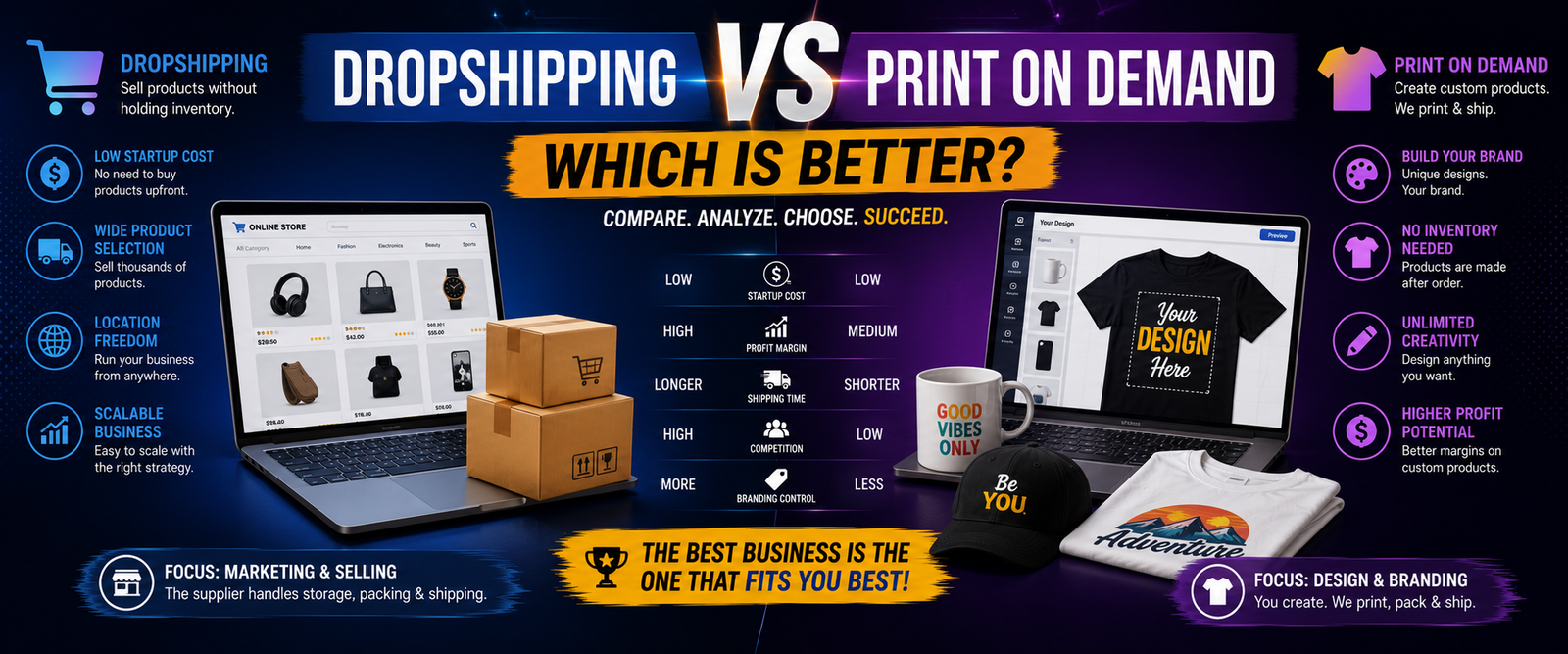
6. Print-on-Demand Store
A print-on-demand business lets you sell custom-designed products — t-shirts, hoodies, mugs, phone cases — that only get printed once a customer actually places an order, meaning you never need to hold or manage physical inventory.
Once your designs are uploaded to the platform, the store can effectively run and generate sales on autopilot, with the printing and shipping handled entirely by your production partner.
7. Stock Photography
If photography’s your thing, uploading images to stock photography platforms turns your existing skill set into a recurring income stream. Businesses and content creators are constantly purchasing images for marketing materials, spanning categories like business environments, nature and landscapes, lifestyle photography, and technology imagery.
A single well-composed photo can end up licensed and sold multiple times over, quietly generating small amounts of income long after you originally took it.
8. Mobile App Development
Building a mobile app can create a genuinely long-term passive income stream, monetized through paid downloads, in-app advertising, in-app purchases, or subscription models.
This one requires more technical skill upfront than most items on this list, but a successful app can keep generating income for years with relatively modest ongoing maintenance, especially compared to the effort of the initial build.
9. Membership Websites
Membership sites offer exclusive content to subscribers who pay a recurring monthly or yearly fee — think educational communities, premium newsletters, online learning platforms, or professional networking spaces.
The real advantage here is recurring revenue. Instead of chasing one-time sales repeatedly, you’re building a subscriber base that pays consistently, which tends to produce far more predictable income than one-off product sales.
10. Podcasting
Podcasting has grown considerably as a business model in its own right, with creators earning through sponsorship deals, advertising, listener donations, and premium content subscriptions.
Once an episode is published, it continues to accumulate listens and generate revenue over time, meaning your back catalog keeps working for you well after each individual recording session ends.
11. Selling Website Themes or Plugins
Developers with the right skills can build digital tools for websites — WordPress themes, Shopify themes, plugins, or design templates — and sell them repeatedly to website owners around the world.
Since the product itself doesn’t change from sale to sale, this is a genuinely scalable model once you’ve built something people actually want, with most of your ongoing work limited to updates and customer support.
12. Writing and Selling eBooks
Ebooks remain one of the simplest digital products to actually create, and popular niches include self-improvement, business and entrepreneurship, fitness and health, and personal finance.
Once published, an ebook can keep generating sales indefinitely — my aunt’s houseplant guide being a pretty good real-world example of exactly how long that tail can run.
13. Online Marketplaces for Creative Assets
Artists and designers can sell creative assets directly online — fonts, graphic elements, illustrations, and video templates among them. Marketers and content creators are constantly on the hunt for exactly this kind of resource to speed up their own work.
Once uploaded to the right marketplace, these assets can sell repeatedly with essentially no additional effort required per sale.
14. Niche Websites
Niche websites focus tightly on a specific topic — technology reviews, travel guides, fitness advice, or product comparisons, for example — and generate income primarily through advertising and affiliate marketing.
Once articles start ranking well in search engines, they can keep pulling in organic traffic for years, which is part of why niche sites remain such a popular long-term passive income play.
15. Email Newsletter Business
Email newsletters have quietly become a legitimate passive income business in their own right. Creators build an engaged email list and send valuable content on a regular schedule, monetizing through sponsorships, affiliate marketing, or premium paid subscription tiers.
Some newsletter creators with genuinely dedicated audiences have turned this into a significant income stream, precisely because email tends to build a closer, higher-trust relationship with readers than most other formats.
How to Actually Pick the Right One for You
With fifteen legitimate options on the table, narrowing down can feel overwhelming. A few things worth weighing honestly:
Your existing skills. Pick something that plays to abilities you already have, or are genuinely willing to build.
Your actual interests. Working on a topic you enjoy dramatically increases your odds of sticking with it long enough to see real results.
Real market demand. Make sure people are genuinely interested in your chosen niche before investing serious time.
The time commitment involved. Some of these businesses (courses, apps) require considerably more upfront effort than others (affiliate content, niche sites) — be honest with yourself about how much time you can realistically front-load.
What Actually Makes These Businesses Succeed
Focus on long-term value, not quick wins. Passive income businesses genuinely take time to grow — expecting fast results tends to set people up for frustration and premature quitting.
Build a real audience. Trust, built consistently over time, underpins almost every durable revenue stream on this list.
Diversify across multiple streams. A lot of successful entrepreneurs don’t rely on just one of these models — they layer several together, which spreads risk and compounds income over time.
Lean on automation wherever you can. The right tools reduce manual work considerably and free you up to focus on the parts of the business that actually need your personal attention.
Mistakes Worth Avoiding
Expecting instant results. Passive income, almost without exception, takes real time to develop — patience isn’t optional here.
Trying to do too many ideas at once. Focusing deeply on one idea first tends to outperform spreading yourself thin across five half-finished attempts.
Skipping marketing entirely. Even a genuinely excellent product or piece of content needs real promotion behind it — nothing sells itself purely on merit.
Giving up too early. Consistency, more than any single strategic decision, tends to be the actual difference-maker for long-term success in this space.
Where This Is All Heading
The digital economy keeps evolving, and a few trends are worth watching regardless of which idea you pursue. AI-powered tools are opening up new automation possibilities across nearly every business model on this list. The creator economy keeps expanding, with more individuals building genuine businesses directly around their personal audience. Subscription-based models are becoming increasingly popular as both creators and customers get comfortable with recurring revenue relationships. And digital products broadly show every sign of continuing to grow in demand as more of daily life moves online.
Entrepreneurs who stay alert to these shifts and adjust their approach accordingly tend to build considerably more resilient, profitable businesses over the long run.
Final Thoughts
Online passive income businesses offer a genuinely compelling path toward more financial freedom and flexibility — but it’s worth being honest that they require real effort and dedication up front before that promised “passive” part actually kicks in.
Whether you’re drawn to blogging, affiliate marketing, online courses, or digital product creation, the most important step by far is simply starting and staying consistent through the early stretch where results feel slow or invisible.
The entrepreneurs who actually succeed with this tend to share one thing in common: they focus on providing real value to their audience first, and they build systems that keep generating revenue over time rather than chasing one-off wins. With patience, real persistence, and a strategy that fits your own skills and interests, it’s entirely possible to build multiple passive income streams and create something genuinely sustainable — the kind of thing that, like my aunt’s little houseplant guide, just keeps quietly working long after you’ve moved on to the next project.