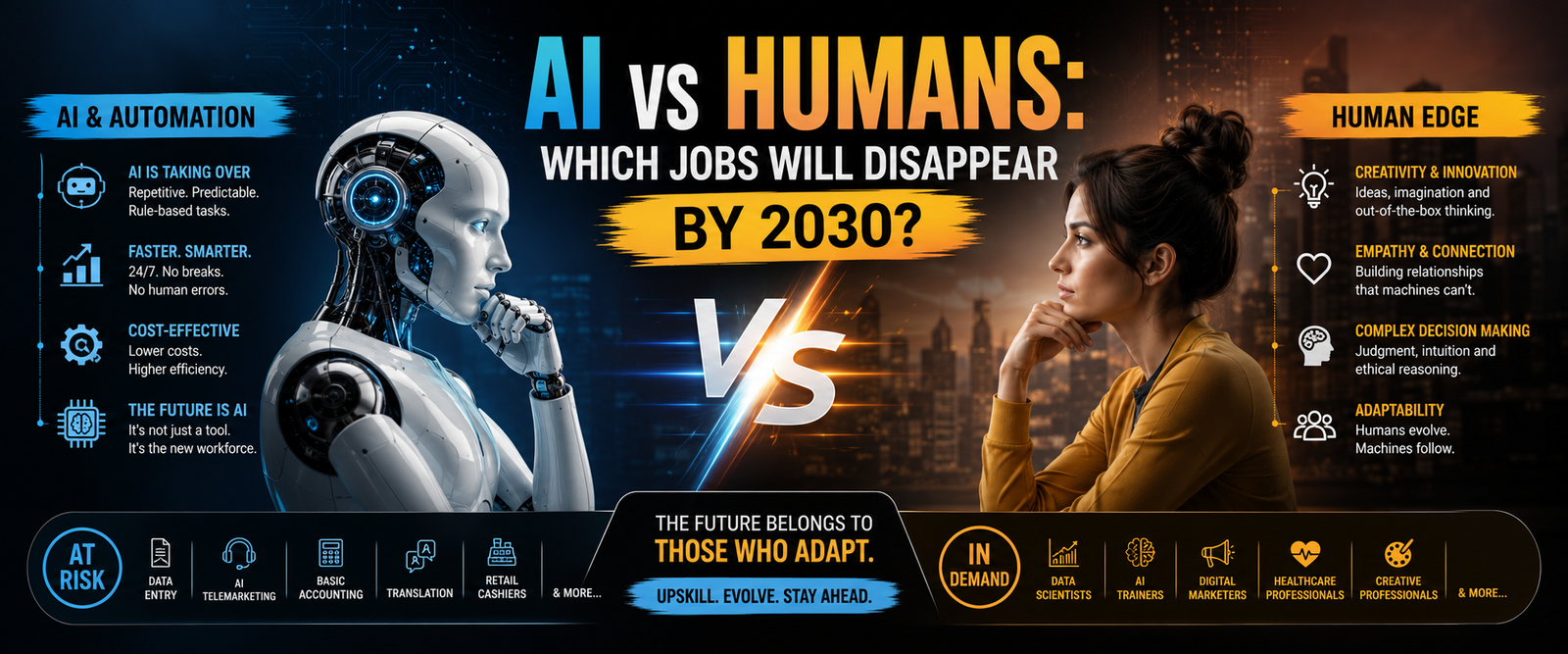

How to Actually Make Money With AI in 2026 (A Real Beginner’s Guide)
Somewhere around two years ago, I watched a friend go from “I don’t really get what all this AI stuff even does” to running a small but genuinely profitable side business built almost entirely around AI tools. She wasn’t a programmer. She wasn’t a marketing expert. She just started experimenting, figured out one thing that worked, and kept doing it. That’s really the whole story behind most people who’ve managed to turn AI into actual income — not some secret shortcut, just consistent use of tools that happen to be remarkably good right now.
Artificial intelligence has stopped being some far-off, futuristic idea and become one of the more practical tools available for making money online. Businesses, freelancers, and everyday entrepreneurs are all leaning on it to automate work, get more done in less time, and generate real income. And in 2026, these tools are more accessible than they’ve ever been — you genuinely don’t need a technical background to start using AI to build a side hustle, launch a digital product, or grow an online business from scratch.
This guide walks through the most realistic, currently-working opportunities, the tools people are actually using, and how to think about building something that lasts rather than fizzling out after a month.
Why Right Now Is a Genuinely Good Moment for This
AI is reshaping entire industries — marketing, finance, healthcare, education, e-commerce — and companies everywhere are actively looking for ways to fold it into how they operate, mostly because it cuts costs and speeds things up. A few things make this a particularly good window for individuals, specifically:
The technology itself is evolving fast and getting easier to use. Tools like ChatGPT let anyone generate content, automate tasks, and solve problems in seconds — no technical training required.
Demand for AI-related skills is climbing. Businesses increasingly need people who know how to actually use these tools for marketing, automation, and content production, and that demand is outpacing the supply of people who know how.
Startup costs are low. A huge number of AI-based side businesses can be started with little to no upfront investment — a laptop and an internet connection genuinely gets you most of the way there.
The market is global. AI lets you offer services or sell products to people anywhere in the world, without the geographic limitations that used to define most small businesses.
Put those together, and it’s easy to see why AI has become one of the more promising paths to earning money online right now — not because it’s a gimmick, but because the barrier to entry has genuinely dropped.
1. AI Content Creation
This is probably the most accessible entry point, and for good reason. Content creators are using AI tools to produce blog posts, social media content, scripts, and marketing copy faster than they ever could manually. Writing assistants like Jasper AI and Grammarly help generate solid drafts quickly, which you then refine with your own expertise and voice.
What this actually looks like in practice: AI can help you produce blog articles, full website copy, product descriptions, email marketing campaigns, and social media posts. The winning formula tends to be using AI to generate a strong first draft, then layering in your own knowledge, tone, and judgment to make it genuinely good rather than generic.
How people turn this into income: Freelance writing services, blogging paired with ad revenue, affiliate marketing woven into content, and selling ebooks or guides built from your writing.
Realistically, beginner writers using these tools tend to land somewhere around $500–$1,000 a month starting out, while experienced bloggers with an established audience can pull in $3,000–$10,000 a month. The gap between those numbers usually comes down to audience size and consistency, not raw talent.
2. AI Graphic Design
You don’t need years of design training anymore to produce genuinely professional visuals. AI image generators like Midjourney, paired with easy editing platforms like Canva, let you go from a simple text description to a polished graphic in minutes.
What people are creating: Social media graphics, website visuals, marketing materials, posters and artwork, and digital downloads people can purchase directly.
Where the money comes from: Selling designs through online marketplaces, running print-on-demand stores (think T-shirts, mugs, and posters featuring your designs), or offering freelance design services to clients who don’t want to learn the tools themselves.
Print-on-demand in particular has become a popular entry point because it requires zero inventory — you upload a design, and the product only gets made once someone actually buys it. Beginners in this space typically see somewhere around $200–$1,000 a month, while designers who’ve built a following or a strong product line can clear $3,000 or more.
3. AI-Powered YouTube Channels
YouTube creators are increasingly automating large chunks of their production process using AI. This spans script writing, voice narration, video editing, and even thumbnail creation — platforms like Pictory and Synthesia let creators produce videos at a pace that would’ve been unthinkable with a traditional production workflow.
A typical AI-assisted workflow looks something like this: generate video ideas using AI, write the script with an AI writing tool, create the voiceover through AI narration, then generate visuals and edit everything together — often without ever appearing on camera yourself.
How the money works: Advertising revenue through YouTube’s monetization program, sponsorship deals once you’ve built an audience, affiliate marketing links in your descriptions, and selling your own digital products directly to viewers.
Earnings here vary widely — smaller channels might bring in a few hundred dollars a month, while established channels with real subscriber bases can generate thousands. This one tends to reward patience more than the other options on this list, since audience-building takes time regardless of how efficient your production process is.
4. AI-Powered Freelancing
Freelancers across nearly every discipline are using AI to get more done and take on more clients simultaneously. Common AI-assisted freelance services include content writing, SEO optimization, social media management, website design, and digital marketing — all sped up considerably by the right tools.
Where to actually find clients: Freelance marketplaces, professional networking platforms, and your own personal website or portfolio.
The real advantage here isn’t just speed — it’s capacity. AI lets a single freelancer take on more clients than they could handle manually, which directly translates into higher income potential without necessarily working more hours.
Part-time freelancers using AI tools tend to land somewhere around $500–$2,000 a month, while those doing this full-time and building real client relationships can push past $5,000 a month.
5. Selling AI-Assisted Digital Products
If passive income is what you’re after, this is arguably the strongest option on this list. Digital products — ebooks, AI prompt templates, online courses, design templates, business guides — can be created once with AI assistance and then sold repeatedly without additional ongoing work.
A concrete example: imagine putting together an ebook on productivity, using AI to help generate the outline, draft the content, and polish the final edit. Once that ebook exists, it can be sold indefinitely with essentially zero marginal cost per sale.
Where these get sold: personal websites, online marketplaces, and dedicated course platforms.
Because the work is front-loaded and the product itself becomes a repeatable asset, successful digital products can generate anywhere from $1,000 to $10,000 a month, depending on how well the product resonates and how much ongoing marketing effort goes into keeping it visible.
6. AI Automation Services
Businesses of every size are hungry for ways to automate repetitive internal processes, and this has created real demand for people who understand how to set these systems up. Platforms like Zapier connect different apps together and let you automate entire workflows without needing to write custom code.
Typical automation projects include: email marketing sequences, customer support chatbots, automated data entry, and lead generation systems that run without manual oversight.
Why businesses are willing to pay for this: automation saves them time and money on an ongoing basis, which makes it an easy expense to justify — especially when the alternative is paying a human to do the same repetitive task indefinitely.
Automation specialists commonly charge somewhere between $200–$1,000 per individual project, with more advanced, ongoing automation retainers bringing in $1,000–$5,000 a month from a single client.
7. AI-Assisted Affiliate Marketing
Affiliate marketing — promoting other people’s products and earning a commission on resulting sales — gets a genuine efficiency boost from AI tools. AI can help with keyword research, blog writing, email campaigns, and ad copy generation, all of which normally eat up huge amounts of time when done manually.
The niches that tend to pay best include technology products, software services, finance tools, and online education — areas where commissions per sale tend to be higher and audiences are actively looking to make a purchase decision.
Affiliate marketers using AI-assisted content tend to start around $500–$3,000 a month, and those who’ve built a genuinely large, engaged audience can clear $10,000 or more monthly.
8. AI Online Courses and Coaching
As more people want to actually learn how to use AI tools themselves, there’s a growing appetite for structured education around exactly that. Course topics doing well right now include AI for business productivity, AI-assisted content creation, and AI marketing strategy.
Why this tends to be profitable: demand for AI education is climbing fast, and a lot of professionals are actively looking to build these skills into their existing careers. A course, once created, can be sold to new students indefinitely with minimal extra effort per sale.
Beginner course creators typically see $1,000–$5,000 a month, while established educators with a recognizable name in the space can generate $10,000 or more monthly.
A Few Honest Tips If You’re Just Starting Out
Pick one opportunity and actually commit to it. It’s tempting to dabble in five different income streams at once, but focus tends to win here — mastering one approach beats spreading yourself thin across several half-finished attempts.
Learn to actually talk to AI tools well. This is often called prompt engineering, but really it just means learning how to communicate clearly with these tools so they give you genuinely useful output instead of generic filler. This single skill dramatically improves your productivity across every option on this list.
Build some kind of online presence. A simple website, an active social account, or a professional profile makes it significantly easier for clients or customers to find and trust you.
Keep learning as the tools change. AI technology moves fast, and the tools that work best today may look quite different in a year. Staying current isn’t optional if you want to stay competitive.
The Honest Challenges Worth Knowing About
It wouldn’t be a fair picture without naming the real difficulties, because there are some.
Competition is real and growing. A lot of people are entering this space right alongside you, which means standing out increasingly matters more than just showing up.
Quality control takes real effort. AI-generated content and designs almost always need human editing to ensure accuracy, originality, and a voice that doesn’t feel generic or templated.
Ethics genuinely matter here. Using AI responsibly — being transparent about it where relevant, avoiding misleading claims, respecting originality — isn’t just a nice-to-have, it’s increasingly something audiences and platforms are paying attention to.
Where This Is Likely Heading
AI is going to keep reshaping industries in the years ahead, and new tools and platforms will keep opening up fresh opportunities for entrepreneurs and freelancers willing to experiment. People who genuinely learn to use these tools effectively now are likely to hold a real advantage as the broader job market continues shifting around them.
It’s worth being clear-eyed about one thing, though: AI isn’t going to replace human creativity and judgment. What it’s becoming is a genuinely powerful partner for productivity and innovation — the people who do well with it are the ones treating it as a collaborator, not a replacement for their own thinking.
Final Thoughts
Making money with AI in 2026 is more within reach than it’s ever been. With the right tools and a reasonable strategy, beginners can genuinely build profitable side hustles, and some go on to turn them into full-time businesses.
The paths available span content creation, graphic design, YouTube automation, freelancing, digital product sales, automation consulting, affiliate marketing, and online courses — plenty of room to find something that actually fits your interests and existing skills rather than forcing yourself into a lane that doesn’t suit you.
The most important step, more than picking the “perfect” option, is simply starting. Experiment with the tools, build real skills as you go, and stay open to adjusting your approach as you learn what actually works for you. With enough persistence and a bit of creativity, AI can become a genuinely powerful engine for building income — and, over time, real financial flexibility.