How to Lose 10kg Without Ever Setting Foot in a Gym
A few years ago, a friend of mine announced she wanted to lose 10kg. Her first move was to sign up for a gym membership she used four times before the guilt of the unused direct debit became worse than the guilt of not going. She’s not alone — for a lot of people, “losing weight” and “joining a gym” feel like the same decision. They’re not. She eventually lost the weight anyway, almost a year later, without ever going back — and the way she did it is basically the blueprint for everything in this post.
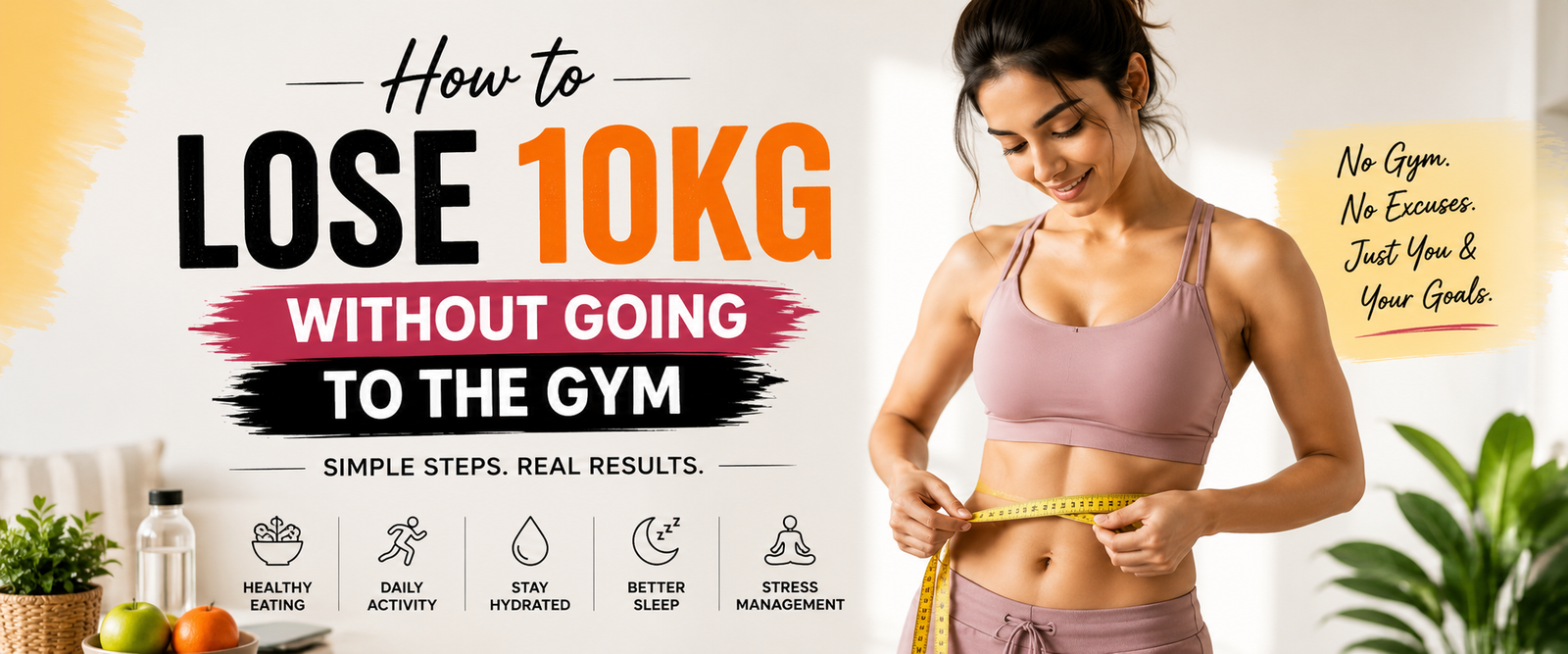
If you’ve been putting off a weight loss goal because you don’t have gym access, don’t enjoy gyms, or simply can’t fit one into your life right now, here’s the reassuring truth: 10kg is a completely realistic target without a single gym session. What actually moves the needle is diet, daily movement, sleep, and consistency — all of which you already have full control over, right where you are.
Let’s walk through exactly how this works.
Is Losing 10kg Without a Gym Actually Realistic?
Yes — and it’s worth understanding why before we get into the how, because understanding the mechanism is what keeps people consistent when motivation dips (and it will dip).
Weight loss comes down to one core principle: burning more calories than you take in, known as a calorie deficit. Your body is constantly spending energy just to keep you alive — breathing, digesting food, walking around, even thinking — and when you consistently give it less fuel than it needs for all of that, it starts pulling energy from stored fat. That’s the entire mechanism behind fat loss, and none of it requires a barbell.
Here’s the part that surprises most people: diet does the majority of the heavy lifting. Most estimates put it somewhere around 70-80% diet, 20-30% activity. A gym session can absolutely help create that deficit, but it’s a relatively small slice of the picture compared to what’s happening in your kitchen. This is genuinely good news if you don’t have gym access — it means the biggest lever available to you is one you can pull from home, starting today.
So How Long Will 10kg Actually Take?
I want to be straight with you here, because the internet is full of “lose 10kg in 2 weeks” nonsense that sets people up to fail. Healthy, sustainable fat loss happens at roughly 0.5 to 1kg per week. Do the math on that and you’re looking at somewhere between 10 and 20 weeks — call it two and a half to five months — to lose 10kg properly.
That might feel slower than you’d like. But here’s the trade-off: crash diets can absolutely produce faster numbers on the scale early on, and then they tend to fall apart — muscle loss, nutrient deficiencies, and the frustrating rebound weight regain that leaves people right back where they started (sometimes heavier). Slow and steady genuinely wins this one. The goal isn’t just to lose 10kg — it’s to lose it and keep it off.
Step One: Fix Your Plate Before You Fix Your Schedule
If you only change one thing from this entire article, make it your diet. Here’s how to actually do that without turning your life into a spreadsheet of misery.
Make Protein the Star of Every Meal
Protein is doing more work for your weight loss than almost any other single nutrient. It keeps you fuller for longer, it supports your metabolism, and — critically — it helps you hang onto muscle mass while you’re losing fat, which matters both for how you look and how your metabolism functions long-term.
Good sources to build meals around: eggs, chicken, fish, Greek yogurt, lentils, tofu, and cottage cheese. If you can get a solid protein source onto your plate at breakfast, lunch, and dinner, you’ll likely notice your hunger between meals drops noticeably.
Don’t Underestimate Fiber
Fiber is the quiet hero of appetite control. It slows down digestion, which keeps you satisfied for longer after eating, and it does wonders for your gut health along the way. Vegetables, fruits, oats, beans, and whole grains are your go-to sources here. A meal built around protein and fiber together is genuinely one of the simplest formulas for staying full on fewer calories.
Cut Back on Sugar and Refined Carbs — Don’t Eliminate Them
Sugary drinks, cakes, white bread, candy, and processed snacks spike your blood sugar quickly, and that spike-and-crash cycle tends to leave you hungrier sooner, not to mention it’s easy to overconsume calories through these foods without even noticing. Swap them where you can for brown rice, quinoa, whole wheat, and sweet potatoes — carbs that digest more slowly and keep your energy steadier.
Notice I said “cut back,” not “cut out.” Total restriction tends to backfire through cravings and eventual binges. Moderation is far more sustainable than an all-or-nothing approach.
Get a Handle on Portions
Even genuinely healthy food adds up if you’re eating too much of it. A few small, practical adjustments help enormously: use a smaller plate, actually slow down while you eat, and stop when you feel satisfied rather than stuffed. This sounds almost too simple to matter, but re-learning to actually notice your body’s fullness signals — instead of eating on autopilot — is one of the most underrated weight loss tools there is.
Drink More Water Than You Think You Need
Water helps regulate hunger, supports digestion, and even gives your metabolism a small boost. A genuinely useful habit is drinking a glass of water before meals — it’s a simple trick that tends to naturally reduce how much you eat. Aim for somewhere around 2-3 liters a day, adjusting for your activity level and climate.
Step Two: Move More, Without a Single Gym Machine
You don’t need equipment to burn meaningful calories. You need consistency.
Walking Is Underrated
Walking might be the single most sustainable form of exercise that exists, precisely because it doesn’t feel like exercise. It burns calories, supports heart health, and does wonders for stress levels — a real triple win. Aim for somewhere around 8,000-10,000 steps a day, and know that a brisk walk can burn somewhere in the range of 200-300 calories per hour. Stack that up daily and it becomes a genuinely significant contributor to your calorie deficit.
A Simple Home Workout Circuit
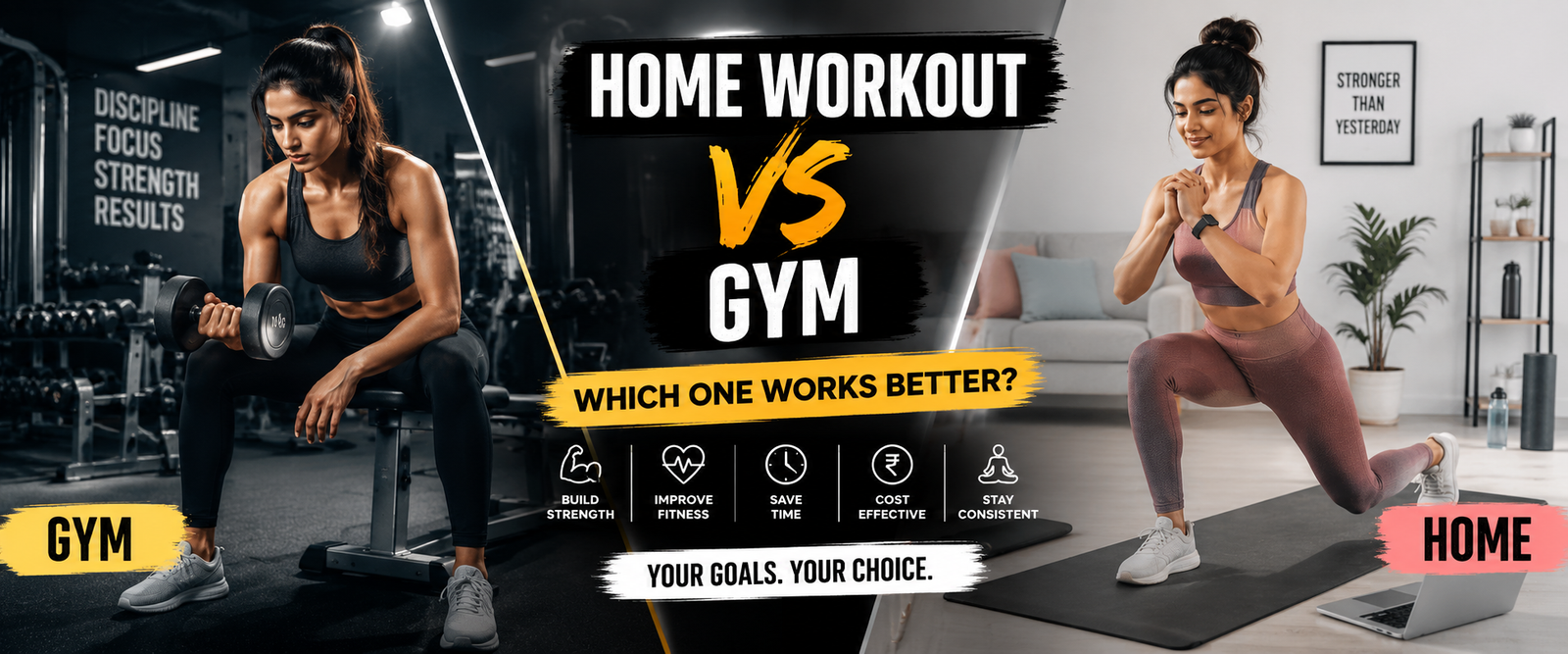
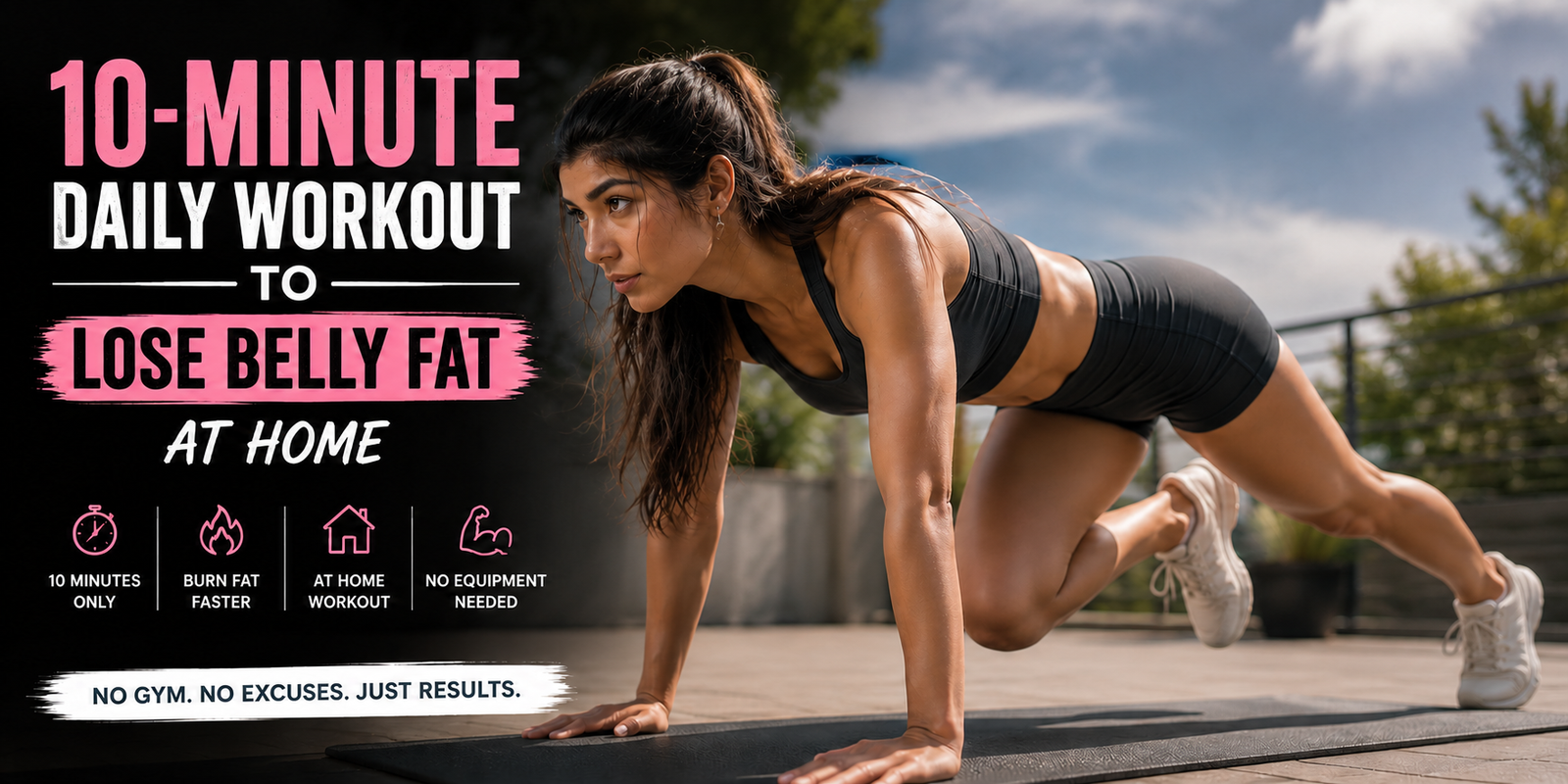
You can build real strength and torch calories using nothing but your own body weight. A beginner-friendly 20-minute circuit looks something like this:
- Jumping jacks — 2 minutes
- Bodyweight squats — 2 minutes
- Push-ups — 2 minutes
- Lunges — 2 minutes
- Plank — 2 minutes
Run through that circuit twice and you’ve got a genuinely effective 20-minute session that builds strength while burning fat — no membership required.
Sneak Movement Into Your Day
Beyond dedicated workout time, the small stuff adds up more than people expect. Taking the stairs instead of the elevator, pacing around while you’re on a phone call, tackling household chores with a bit more energy, even gardening — these all quietly increase how many calories you burn across the day without ever feeling like “exercise.”
Step Three: Stop Sleeping On Sleep (Literally)
This is the one people skip past, and it’s a mistake. Poor sleep genuinely disrupts the hormones that control your hunger and fullness signals. When you’re sleep-deprived, your appetite tends to increase, your cravings for unhealthy food get harder to resist, and your overall energy for staying active drops. Aim for 7-9 hours a night. Good sleep isn’t a “nice to have” alongside your diet and exercise — it’s actively supporting your metabolism and recovery, and skimping on it can quietly sabotage everything else you’re doing right.
Step Four: Get Ahead of Stress
Stress and weight gain are more connected than most people realize. When you’re stressed, your body produces cortisol, and elevated cortisol levels are linked to increased fat storage, particularly around the midsection. Beyond the biology, stress is also just a classic trigger for emotional eating.
Simple, genuinely effective ways to manage this include meditation, deep breathing exercises, yoga, spending time outdoors, and just talking things through with people close to you. None of this needs to be complicated — even ten quiet minutes a day can make a real difference in how you handle cravings and decision-making around food.
Step Five: Build Habits, Not Willpower
Here’s an honest truth: willpower runs out. Habits don’t. Long-term weight loss isn’t really about gritting your teeth through cravings forever — it’s about building a lifestyle where the healthy choice is just… the normal choice.
A few habits worth building:
- Planning your meals ahead of time, so you’re not making decisions while hungry
- Cooking at home more often, which gives you control over ingredients and portions
- Tracking what you eat, even loosely, to build awareness
- Avoiding mindless late-night snacking
None of these need to be perfect. They just need to be consistent.
A Simple Daily Meal Plan to Get You Started
If you want a rough starting template, here’s one that balances protein, fiber, and reasonable portions throughout the day:
Breakfast: Oatmeal with berries and nuts, or two boiled eggs with whole grain toast
Mid-morning snack: An apple or a serving of yogurt
Lunch: Grilled chicken or tofu, brown rice, and a generous portion of mixed vegetables
Afternoon snack: A handful of almonds or a piece of fruit
Dinner: Grilled fish or lentil soup with steamed vegetables
This isn’t a rigid prescription — swap in whatever fits your taste and culture — but it’s a solid framework for what a balanced, weight-loss-friendly day of eating actually looks like.
Mistakes That Quietly Sabotage People
Skipping meals. This tends to backfire — it can slow your metabolism and often leads to overeating later in the day when hunger finally catches up with you.
Drinking your calories. Soda, sweetened coffee, and energy drinks pack in a surprising number of calories without ever making you feel full. These are some of the easiest calories to cut without really missing anything.
Expecting overnight results. Real, sustainable change takes weeks and months, not days. Patience isn’t optional here — it’s part of the method.
Falling for crash diets. They’re hard to sustain and tend to end in exactly the weight regain you were trying to avoid.
Not tracking anything. Keeping loose tabs on your weight, your measurements, and how your fitness is improving gives you something concrete to stay motivated by, especially on weeks when the scale doesn’t move much.
What You Actually Get From Losing 10kg
It’s easy to get fixated on the number itself, but the real payoff is everything that comes with it: better heart health, lower blood pressure, reduced diabetes risk, easier mobility, noticeably higher energy levels, and — for a lot of people — a real boost in self-confidence. This isn’t just a cosmetic change. It’s a meaningful shift in how your body functions day to day.
Staying Motivated When the Scale Slows Down
There will be weeks where nothing seems to be happening, and that’s completely normal — it doesn’t mean your approach has stopped working. A few things that help during those stretches: set goals that are actually realistic for your life, celebrate the small wins along the way (not just the big number), keep tracking your progress so you can see it even when the scale is stubborn, and surround yourself with people who support what you’re doing rather than undermine it.
Remember that this is a long-term project, not a two-week sprint. The people who succeed at this aren’t the ones with the most willpower — they’re the ones who kept showing up even during the slow weeks.
Final Thoughts
Losing 10kg without a gym membership isn’t a workaround or a “lesser” method — it’s simply a legitimate, well-proven path that works because it targets the things that actually matter most: what you eat, how much you move, how well you sleep, and how consistently you stick with it.
You don’t need expensive equipment or a complicated routine. You need a reasonable calorie deficit, a bit of daily movement, decent sleep, and the patience to let the process play out over a few months rather than a few days.
Start small. Pick one or two changes from this list and actually stick with them this week, rather than trying to overhaul everything at once. Small, consistent improvements compound into real transformation — and you’ll get there without ever needing a gym key card.