
So You Want to Build an Online Course? Here’s the Real Talk Version
A few years ago, “make a course and sell it online” sounded like something only YouTubers with six-figure subscriber counts could pull off. Today it’s a Tuesday afternoon project for a nurse who’s tired of answering the same questions in the break room, a freelance designer who wants income that doesn’t disappear the moment she stops billing hours, or a guy who’s spent a decade fixing motorcycles and has finally realized that the stuff in his head is worth more than he thought.
Online education isn’t a niche anymore. It’s a genuinely massive, still-growing industry, and the barrier to entry has quietly collapsed. You don’t need a film crew. You don’t need a publishing deal. You don’t need to be “the” expert in your field — you just need to be a few steps ahead of the person you’re trying to help.
But here’s the thing nobody tells you upfront: most courses fail not because the creator didn’t know their subject, but because they treated “make the course” as the whole project instead of step one of a much longer one. This guide is my attempt to walk you through the entire arc — from the blank-page moment of picking a topic, all the way through to the unglamorous, ongoing work of keeping a course alive and selling — with as much honesty about the messy parts as I can manage.
Grab a coffee. This is a long one, on purpose, because the short version is the reason so many courses launch to an audience of zero.
Why Bother? The Actual Case for Building a Course
Let’s not pretend this is charity work. You’re doing this because, done right, a course is one of the best trades of effort-for-income available to an ordinary person with real skills.
You build it once, and it sells over and over. This is the part people romanticize, and it’s true, but it’s not automatic — it’s true if the course is good and if people can find it. Still, compare it to consulting: every hour of consulting is an hour you’ll never get to sell again. Every hour spent building a course is an hour that keeps paying you as long as the course stays relevant.
The income doesn’t stop when you do. A course you built in March can sell in November while you’re on vacation, sick, or just busy with something else. That’s not “passive” in the lottery-ticket sense — you still have to build an audience and maintain the thing — but it is genuinely decoupled from your calendar in a way that trading hours for dollars never is.
Your students aren’t limited by geography. A cabinetmaker in rural Ohio can teach woodworking joinery to someone in Manila. A former corporate accountant can teach small-business bookkeeping to a shop owner in Lagos. The entire planet is your potential classroom, which matters enormously if your specific topic only has, say, 4,000 truly interested people in your home country but 400,000 worldwide.
Teaching builds a kind of authority that’s hard to fake. When you can explain something clearly enough that a stranger understands it and gets results, people notice. That reputation opens doors — speaking invitations, consulting retainers, partnerships, media mentions — that a resume alone rarely does.
It scales in a way most small businesses don’t. A hair salon owner adds capacity by hiring more stylists and renting more chairs. A course creator adds capacity by… doing nothing. The tenth student and the ten-thousandth student cost you roughly the same amount of your time.
None of this means it’s easy. It means the upside, when it works, is unusually good for the type of effort involved. Let’s get into how you actually get there.
Step One: Pick a Topic That Deserves to Exist
This is where almost everyone gets stuck, and it’s usually because they’re asking the wrong question. The wrong question is “what am I most passionate about?” The better question is “where do my knowledge, an actual paying audience, and a real problem all overlap?”
Picture three circles. One is what you genuinely know how to do — not textbook knowledge, but knowledge earned through doing the thing, badly at first, and then well. The second circle is what enough people are actively searching for and willing to pay to solve. The third is a specific, nameable problem, not a vague subject area. Your course topic lives where all three overlap. Miss any one of the three and you’ll either build something nobody wants, something you can’t actually teach with authority, or something too fuzzy to market.
Ask yourself these questions honestly
- What do people already come to me for advice about, unprompted?
- What took me years to figure out that I could now teach someone in weeks?
- What do I get asked the same three or four questions about, over and over, by different people?
- What frustrated me before I learned it — and what would past-me have paid to shortcut?
That last question is underrated. The best course topics often come from your own scar tissue. You remember exactly where you got stuck, which means you know exactly where your students will get stuck too.
Categories that consistently do well
Not every topic is created equal in terms of market appetite. Some categories have proven, durable demand:
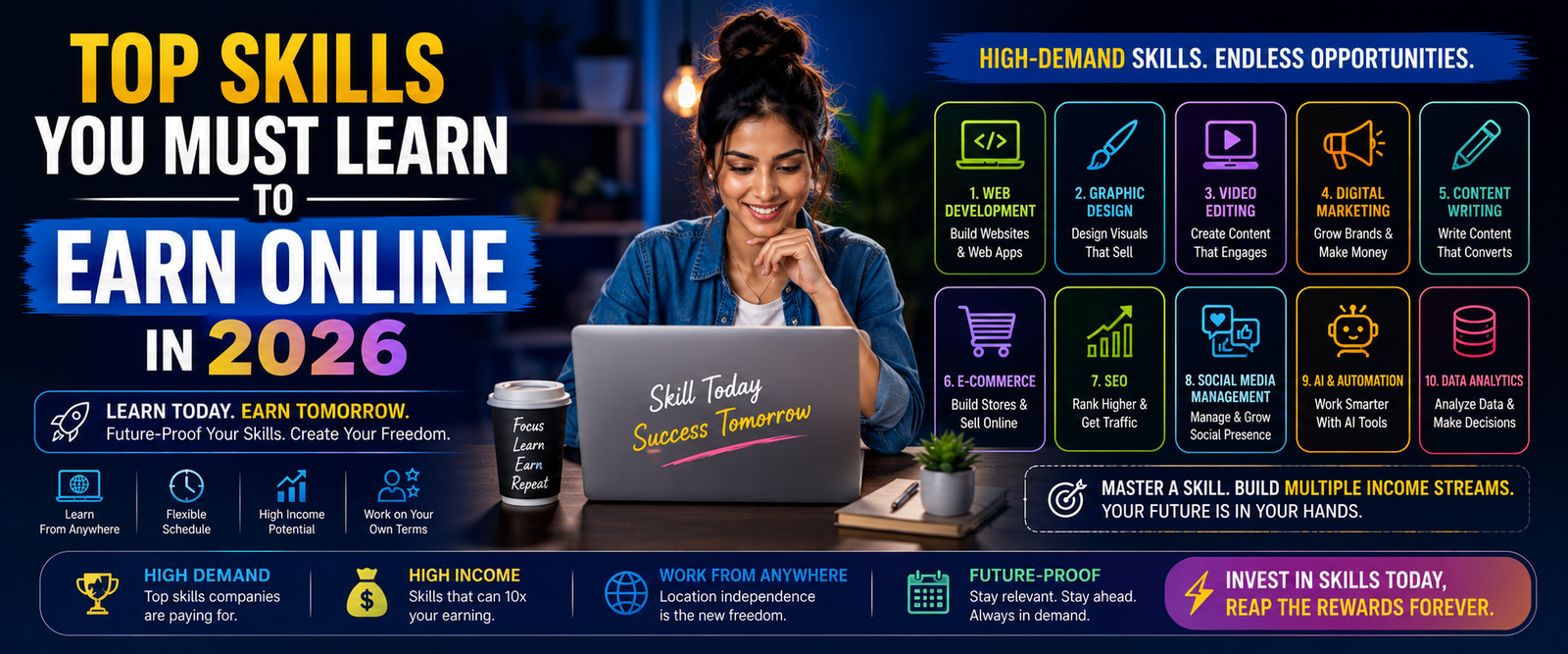
- Digital marketing and paid advertising
- Social media growth and content strategy
- Web and app development
- Graphic design and brand identity
- Photography and videography
- Video editing
- Personal finance and budgeting
- Language learning
- Fitness, nutrition, and movement
- AI tools, automation, and prompting
Notice the pattern: these are largely “high-income skill” or “life-improvement” categories. People pay more readily to learn something that either makes them money or visibly improves their life. A course on abstract trivia, however fascinating to you, is a much harder sell than a course that gets someone their first freelance client or their first ten pounds of muscle.
That said, don’t let this list talk you out of a genuinely niche idea. A tightly-focused course on, say, restoring vintage fountain pens or setting up a home aquaponics system can do extremely well — because the audience, while small, is often starved for good instruction and willing to pay a premium for it. Niche and profitable aren’t opposites. Niche and unvalidated is the actual danger.
Don’t skip validation — this is the step that saves you months
Before you record a single lesson, spend real time confirming that people are already looking for what you’re about to teach. This isn’t optional homework; it’s the difference between building something and building the right something.
A few low-cost ways to check:
- Search for existing courses on the topic. If there are zero, that’s not automatically a green light — sometimes it means there’s no market. If there are several, that’s usually a good sign, not a bad one; it means demand exists, and your job becomes differentiation, not evangelism.
- Look at what people are already asking, unpaid, in forums and comment sections. Reddit threads, Facebook groups, Quora questions, YouTube comments under related tutorials. If people are begging for clearer explanations of something in the comments of a mediocre free video, that’s a signal worth paying attention to.
- Check trend data for whether interest in your topic is flat, rising, or fading. You don’t want to spend three months building a course around something that peaked two years ago.
- Talk to five real humans in your target audience, if you can. Not a survey — an actual conversation. Ask what they’ve already tried, what didn’t work, and what they’d pay for if it existed. This single step outperforms almost everything else on this list because it gives you actual language your future students use, which you’ll want later for your sales page.
If, after all that, you find genuine unmet demand — people actively frustrated, actively searching, and not fully satisfied by what already exists — you’ve got a topic worth building around.
Step Two: Stop Trying to Teach Everyone
Here’s a mistake I see constantly: someone picks a broad, respectable-sounding topic — “learn photography,” “get into digital marketing,” “understand personal finance” — and then wonders why their sales page falls flat.
The problem isn’t the topic. It’s that nobody buys a course meant for “everyone,” because a course meant for everyone speaks convincingly to no one. The more specific your audience, the more your marketing writes itself, your content gets sharper, and your students get better results — which, not coincidentally, is also what generates the testimonials that sell your next round of students.
Compare these two:
- “Learn photography” versus “A beginner’s guide to launching a wedding photography side business.”
- “Learn digital marketing” versus “Digital marketing for solo consultants who hate self-promotion.”
- “Get fit” versus “Strength training for busy parents who have twenty minutes and a set of dumbbells.”
The narrower version in each pair sounds less impressive on paper and sells dramatically better in practice. Why? Because the person reading it thinks “wait, that’s me” instead of “that could maybe apply to me, I guess.” Specificity is a filter that does your marketing for you before a single ad dollar gets spent.
A useful exercise: write down who this course is emphatically not for. If you can’t name who you’re excluding, you probably haven’t narrowed enough. “Not for total beginners who’ve never picked up a camera” or “not for people already running six-figure marketing agencies” — that kind of boundary tells your ideal student, by contrast, exactly where they fit.
Step Three: Build the Skeleton Before You Touch a Camera
Once you know who you’re teaching and what problem you’re solving, resist the urge to just start recording. The courses that feel disorganized and rambling to students almost always skipped this step — the creator was thinking out loud into a microphone instead of teaching from a plan.
Good courses are built like a staircase: each module gets the student one landing higher, and by the time they reach the top, they can do the thing they came for. That structure needs to exist on paper (or in a spreadsheet, or a whiteboard photo, whatever works for you) before it exists on video.
A worked example
Say you’re building a course on growing a YouTube channel from zero. A sensible module breakdown might look like:
- Module 1 — Orientation. What this course will and won’t cover, how to use it, and what “success” looks like by the end.
- Module 2 — Finding a niche that can actually grow. How to pick a lane specific enough to rank, broad enough to sustain years of content.
- Module 3 — Producing videos people finish watching. Scripting, pacing, and the editing choices that keep retention up.
- Module 4 — Getting discovered. Titles, thumbnails, and the search and recommendation mechanics that determine whether anyone sees the video at all.
- Module 5 — Turning viewers into subscribers. The specific asks, hooks, and channel structure that convert casual viewers into a returning audience.
- Module 6 — Making money from it. Ads, sponsorships, affiliate links, and using the channel to sell something of your own.
Notice that each module builds on the last — you wouldn’t teach monetization before discovery, because there’s nothing to monetize yet. That ordering logic is the actual skill of course design, and it’s worth more time than people give it.
A few planning habits worth adopting
- Keep individual lessons short and singular. One idea per lesson, taught cleanly, beats three ideas crammed into one twenty-minute ramble. If you notice a lesson script covering two distinct concepts, that’s usually two lessons.
- Sequence for momentum, not comprehensiveness. You don’t have to teach every possible thing about your topic in module one. Teach what gets the student a small, real win early, so they stay motivated for the harder stuff later.
- Bake in practical application. A lesson that only explains a concept is weaker than one that has the student immediately do something with it — a worksheet, a mini-exercise, a “pause and try this” moment.
- Write toward an outcome, not a subject. “Understanding SEO” is a subject. “Getting your first video to rank on page one for a target keyword” is an outcome. Outcomes are what students actually buy, even when the marketing copy talks about subjects.
Plan this out in writing before you touch any recording equipment. A messy but complete outline beats a beautifully produced module one with no idea what comes next.
Step Four: Actually Making the Thing
With a structure in hand, it’s time to build the material students will actually experience. This is the part that intimidates people most, and it’s also the part that requires far less equipment and polish than most beginners assume.
The formats worth knowing
Video lessons remain the most popular course format, and for good reason — they feel personal in a way text never quite manages, and they let you demonstrate, not just describe. If your topic involves any kind of physical skill, software interface, or visual technique, video is close to mandatory.
Slide-based explanations are worth mixing in wherever you’re explaining a concept, framework, or process that benefits from being seen, not just heard. A well-designed slide can replace three minutes of verbal meandering.
Screen recordings are essential for anything software-related — coding, design tools, spreadsheet work, marketing platforms. Watching someone’s cursor move through the actual steps is often more valuable than any amount of description.
Written materials — PDFs, cheat sheets, templates, worksheets — give students something to act on between video lessons, and they’re often what students return to weeks later when they need a quick reference instead of rewatching a twenty-minute video.
Quizzes and small assignments aren’t busywork if you design them well. They force active recall, which is how learning actually sticks, and they give you (and eventually your marketing) concrete evidence that students are progressing.
On equipment: relax
You do not need a production studio. What you need is:
- A decent microphone. This matters more than almost anything else. Viewers will forgive mediocre video quality far more readily than they’ll forgive audio they have to strain to understand. A basic USB microphone in the $50–100 range will outperform your laptop’s built-in mic by a wide margin.
- Screen recording software, most of which is free or cheap, for anything demonstrating a digital process.
- A camera or a recent smartphone, which is genuinely good enough for talking-head segments.
- Basic slide software for anything conceptual.
If you’re waiting until you can afford a $3,000 camera setup before you start, you’re waiting for a permission slip nobody’s going to hand you. Clear audio, a clean explanation, and a well-lit face beat a beautifully shot video with a confusing structure, every time.
Step Five: Deciding Where This Thing Will Live
Once your material exists, you need somewhere for students to actually access it. Broadly, you have two paths, and plenty of successful creators eventually use both at different stages.
Path one: existing course marketplaces
Large platforms with their own built-in audiences — the Udemy-and-Skillshare-and-Coursera category — let you list a course without needing to bring your own traffic.
The appeal is obvious: there’s already a river of potential students flowing past, and you don’t need marketing experience to get your first sale. This is genuinely valuable if you’re brand new to selling anything online and want to learn the ropes with lower stakes.
The tradeoff is that you’re playing in someone else’s yard. Profit margins on these platforms are typically much thinner than selling directly, pricing is often out of your hands (frequent discounting can train your own students to wait for a sale), and you’re building the platform’s brand more than your own.
Path two: your own platform
Dedicated course-hosting tools — the Teachable-and-Thinkific-and-Kajabi-and-Podia category — let you host and sell courses under your own name, your own domain, your own pricing.
The upside here is control: higher margins, full pricing authority, and every student interaction reinforces your brand instead of a marketplace’s. The downside is that nobody’s sending you traffic. Every student who finds your course found it because you put in the work to get them there.
A pattern I’d genuinely recommend for most first-time creators: start where the traffic already exists to get your first sales, feedback, and reviews with minimal marketing lift, then migrate — or expand — to your own platform once you understand your audience and have some proof that people want what you’re teaching. You don’t have to pick one path forever on day one.
Step Six: Pricing — The Decision Everyone Overthinks
Pricing feels like it should be simple math, and instead it becomes an emotional minefield for almost every new course creator. Too low, and prospective students unconsciously read it as “this probably isn’t very good.” Too high, and the exact beginners you’re trying to reach get priced out before they even open the sales page.
Rough bands that tend to hold up across categories:
- Beginner-friendly, broad-appeal courses: roughly $20–$100. Good for introductory material, hobbyist topics, or anything meant to be an easy first purchase.
- Intermediate, skill-building courses: roughly $100–$500. This is where most solidly-built, outcome-focused courses land — enough depth and support to justify real investment from the student.
- Advanced or highly specialized professional courses: $500–$2,000 or more. These typically serve people whose income directly depends on the skill — think professional certifications, advanced business skills, or anything that pays for itself in a single client win.
The number that actually matters isn’t “what feels fair” in the abstract — it’s what transformation you’re delivering and to whom. A course that helps someone land their first $3,000 freelance client is not overpriced at $300; a course teaching a casual hobby skill probably shouldn’t be priced like it’s a professional certification. Price relative to the outcome, not relative to your own discomfort with charging money for your knowledge (a very common, very human hurdle worth naming honestly).
One more thing worth saying plainly: you can, and probably should, adjust price as you go. Early cohorts, testimonials, and demand data are all legitimate reasons to move price up or down over time. Your launch price isn’t a permanent tattoo.
Step Seven: The Sales Page Is Where the Actual Decision Happens
You can build a genuinely excellent course and still sell almost nothing if the page describing it fails to do its job. The sales page is where a stranger, who has never met you, decides whether to hand over their money based entirely on words and structure on a screen. Treat it with the seriousness that deserves.
A sales page that actually converts needs to answer three questions clearly, fast, and in the visitor’s own language:
- What will I actually learn? Not a vague subject — a concrete list of skills or outcomes.
- Is this built for someone like me? This is where your Step Two work pays off — speak directly to the specific person you designed the course for.
- What will be different for me afterward? The tangible before-and-after, stated plainly.
The pieces worth getting right
A headline built around the result, not the topic. “Learn Digital Marketing” tells someone what the course is about. “Land Your First Freelance Marketing Client Within 30 Days” tells them what their life looks like afterward. The second version is doing actual selling.
A clear list of benefits, not just features. “12 video modules” is a feature. “Walk away knowing exactly how to price your first client project without underselling yourself” is a benefit. Features describe the course; benefits describe the student’s life after taking it.
A visible curriculum. Show the modules. People want to see that there’s a real, structured path here, not a vague promise. This also quietly reassures anxious buyers who worry a course might be thin or padded.
Testimonials from real students. Nothing sells trust like proof that someone just like the visitor already got results. Early on, before you have paying students, consider offering the course free or heavily discounted to a small beta group in exchange for honest feedback and a testimonial — this is a completely normal and smart way to bootstrap social proof.
Some form of risk reversal, most commonly a money-back guarantee. Reducing the buyer’s perceived risk is one of the single highest-leverage things you can do on a sales page, because for a first-time buyer of your course specifically, the biggest barrier isn’t price — it’s uncertainty about whether it’ll actually deliver.
Write your sales page like you’re talking to one specific person you know well — ideally, someone you actually interviewed during your validation step — rather than a faceless “target market.” The best sales copy usually reads less like advertising and more like a very direct, very honest conversation.
Step Eight: Nobody’s Coming Unless You Tell Them
This is the step most new creators underinvest in, and it’s the one that determines whether all the previous work pays off. A genuinely great course with zero marketing behind it earns exactly the same revenue as a mediocre course with zero marketing behind it: none. Creating the course is genuinely only half the job.
Content marketing
Publish material — blog posts, videos, social posts — that’s directly useful to the same person your course serves, and directly related to the problem your course solves. This does double duty: it demonstrates your expertise for free (which builds trust) and it puts you in front of people who are actively searching for solutions to the exact problem you solve for a living.
The trick here is generosity without giving away the entire course. Teach something genuinely useful in your free content; save the deeper structure, the troubleshooting, the accountability, and the full system for the paid version. People don’t resent a taste — they resent being teased with nothing substantial at all.
Email marketing
If there’s one channel that consistently outperforms expectations for course creators, it’s a plain old email list. Offer something useful and specific — a free mini-guide, a short email course, a template — in exchange for an email address, and you’ve built a direct line to people who’ve already raised their hand and said “I’m interested in this topic.”
Unlike social platforms, an email list is yours. Algorithms can’t bury it, platforms can’t ban it away, and it tends to convert at rates that make paid ads look inefficient by comparison.
Video platforms
For most educational topics, a video platform doubles as both a marketing channel and a trust-building machine. A well-made free tutorial that genuinely helps someone is also, implicitly, an audition for your paid material — if you can teach this well for free, imagine what the full course covers.
Affiliates and partners
Once you have a course that’s proven to convert, letting others promote it for a commission can multiply your reach without multiplying your own workload. This works especially well once you have testimonials and a track record — an affiliate needs confidence that what they’re recommending will actually deliver, or they risk their own reputation.
Social platforms
Wherever your specific audience actually spends time — this varies enormously by topic and demographic, so don’t assume — building a visible, consistent presence helps establish the kind of familiarity that makes someone comfortable buying from you rather than a stranger. This is slow, compounding work, not a quick hack, and it’s worth treating it that way rather than expecting overnight virality.
The unifying thread across every one of these channels: you’re not interrupting people with an ad, you’re showing up as someone genuinely useful in a place they already are, consistently, over time.
Step Nine: Becoming Someone Worth Buying From
There’s a reason two nearly identical courses on the same topic can have wildly different sales — people don’t just buy information, they buy it from someone they trust. Building that trust, deliberately, over time, is what people mean by “personal brand,” even though the phrase has gotten a little worn out from overuse.
Practically, this looks like:
- Consistently sharing genuinely useful content in your area, not just promotional material
- Showing your actual thinking and process, not just polished conclusions
- Participating honestly in communities where your future students already hang out — answering questions without an immediate sales pitch attached
- Writing or publishing longer-form material that lets people get a feel for how you think, not just what you know
None of this needs to feel performative or exhausting. The most sustainable version of “personal brand” is simply being visibly, consistently helpful in public, in the specific area you want to be known for. Reputation, over enough time, does a lot of the selling that ad spend would otherwise have to do.
Step Ten: Your First Version Isn’t Supposed to Be the Final Version
One of the most freeing things you can internalize before you launch: your course does not need to be perfect, complete, or even particularly polished to be worth releasing. Plenty of successful, well-reviewed courses started as a rougher, leaner version that got better over time based on actual student feedback — feedback you simply cannot get before real students have gone through the material.
Practical ways to keep improving after launch:
- Actually collect feedback, and make it easy to give — a short survey, a direct question at the end of the course, whatever removes friction from telling you what confused them.
- Fill the gaps students reveal. If five different students get stuck at the same point, that’s not five unlucky students — that’s a signal your explanation needs work, and an easy, high-leverage place to improve the course.
- Refresh anything time-sensitive. Tools, platforms, and best practices change; a course that quietly goes stale erodes trust fast once students notice outdated screenshots or dead links.
- Add bonus material over time. Extra templates, updated modules, or supplementary lessons all increase perceived value for new buyers and give existing students a reason to feel good about their purchase.
Treating your course as a living product rather than a one-time deliverable also gives you a legitimate, honest reason to re-market it periodically — “just added three new lessons” is a genuinely different message than reposting the same launch copy for the fifth time.
The Mistakes That Sink Otherwise Good Courses
A few patterns show up again and again in courses that struggle, regardless of how knowledgeable the creator actually is.
Skipping validation entirely. Building for months around a topic assumption, without ever checking whether real demand exists, is the single most expensive mistake on this list — expensive in time, not just money.
Overstuffing the course. More content is not the same as more value. Students consistently prefer a tight, well-sequenced course that gets them to a clear outcome over an exhaustive one that buries the useful parts under hours of tangential material. If you’re proud of how many hours your course runs, double-check that you’re proud for the right reasons.
Treating marketing as optional or embarrassing. A lot of creators — especially ones with genuine, hard-won expertise — feel uncomfortable “selling.” But marketing, done honestly, is just telling the right person that a real solution to their real problem exists. Skipping it doesn’t make you more humble; it just means fewer people who needed your help ever find it.
Waiting for a perfect version that never comes. Perfectionism disguised as diligence is one of the quietest ways good courses never see daylight. Launch the honest, useful version you have now, and let real feedback — not your own anxious imagination — tell you what actually needs fixing.
What Kind of Money Are We Actually Talking About?
It’s worth being straightforward here instead of dangling vague promises. Course income depends heavily on a handful of concrete factors: your price point, the size and quality of your marketing effort, how large and engaged your reachable audience is, and how much genuine demand exists for your specific topic.
A simple, illustrative scenario: a course priced at $100, sold to 200 students, generates $20,000. That’s not a hypothetical outlier — it’s a fairly modest, entirely achievable outcome for a well-validated, well-marketed course with a reasonably engaged audience behind it.
As your audience compounds — more subscribers, a bigger email list, stronger word-of-mouth, better reviews — the same course, at the same price, tends to sell to progressively more people with progressively less marketing effort per sale. Some creators do eventually build this into a genuine six-figure, or larger, income stream. But that outcome is downstream of consistent audience-building over months and years, not a launch-week fluke, and it’s worth setting your expectations around the realistic timeline rather than the highlight-reel version you see in other people’s success stories.
Bringing It All Together
If you strip away all the individual steps, the whole process really comes down to a small number of honest commitments: teach something people genuinely want to learn, teach it to a specific person rather than everyone, structure it so they actually get somewhere by the end, make it reasonably easy to find and buy, and then keep showing up — both in improving the course itself and in telling people it exists.
None of that requires fame, a huge existing audience, or years of preparation. It requires a real skill, a genuine problem you can solve, and a willingness to start with something imperfect and get better in public. The people who succeed at this aren’t necessarily the most qualified experts in their field — they’re often just the ones who were willing to organize what they already knew and put it in front of the people who needed it.
Your knowledge, whatever it is, took you real time and real effort to build. Turning it into a course that helps other people shortcut that same journey — while building something that can keep paying you long after you’ve finished building it — is one of the more genuinely good trades available to anyone willing to do the work.
Start messy. Start small. Just start.