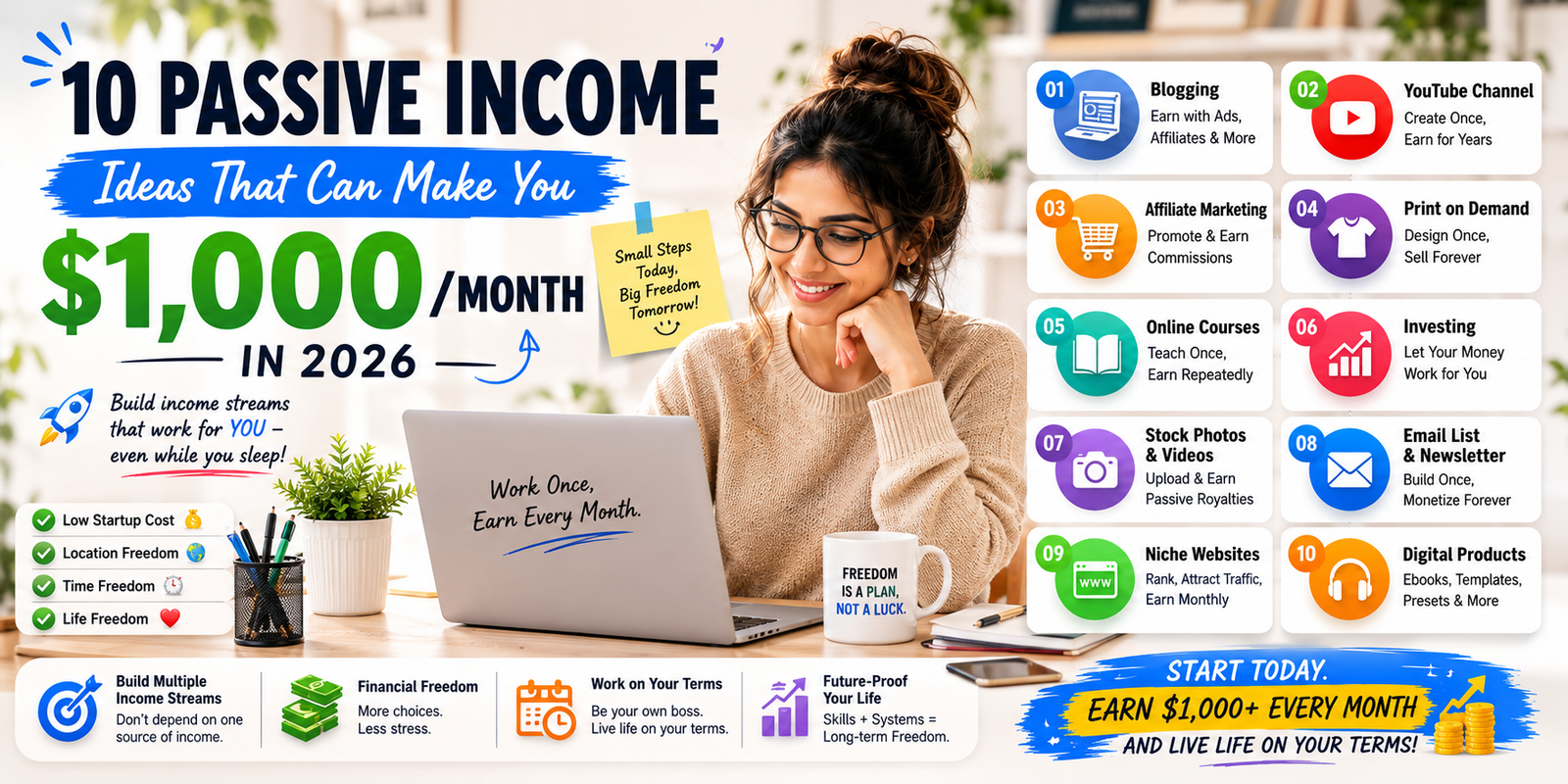

Side Hustles That Actually Work in 2026
My brother-in-law spent about a year mocking me for freelancing on evenings and weekends, calling it “your little internet thing” every time it came up at family dinners. Then his company did a round of layoffs, his position got cut with two weeks’ notice, and the first thing he asked me — not his old boss, not a recruiter, me — was how to get started freelancing himself. He’d spent a decade assuming a steady paycheck was permanent. It took losing it once to realize that a second income stream isn’t a hobby, it’s a hedge.
That shift in thinking is happening everywhere right now, and it’s not hard to see why. Rising living costs, genuine uncertainty about job security, and the sheer growth of the digital economy have pushed millions of people to look for income beyond their main job. In 2026, side hustles have stopped being small, casual weekend gigs and have become a real, legitimate way to build financial breathing room — whether that means paying off debt faster, saving toward something specific, or slowly building toward actual financial independence.
A side hustle, at its simplest, is any activity that brings in income outside your main job. It might be online or offline, part-time or project-based, and it’s usually flexible enough to fit around whatever your existing schedule already looks like.
Here’s the honest caveat, though: not every side hustle out there is actually worth your time. Some demand large upfront investments for very little return. The ones genuinely worth pursuing share a few traits — proven demand, real potential to scale, and relatively low startup costs. Let’s walk through the specific side hustles that fit that description in 2026, ones that can realistically bring in anywhere from a few hundred to several thousand dollars a month, depending on how much time and effort you put in.
Why Side Hustles Matter More Than Ever Right Now
Before getting into the specific opportunities, it’s worth understanding the forces pushing so many people toward a second income stream in the first place.
The cost of living keeps climbing. Inflation has pushed up the cost of housing, food, healthcare, and transportation, and a single income increasingly struggles to keep pace with all of it simultaneously.
Job security isn’t what it used to be. Automation, AI, and broader economic shifts have made traditional employment feel considerably less guaranteed than it once did. Having more than one income source genuinely reduces your overall financial risk if any single one disappears — a lesson my brother-in-law learned the hard way.
Digital platforms have opened doors that didn’t exist before. Technology has made earning money online genuinely more accessible than ever — freelancing, digital products, and remote services now let people earn from anywhere with an internet connection.
Financial freedom is a real, achievable goal for a lot of people through this route. Plenty of people use side hustles specifically to pay off debt, save toward a major purchase, or invest toward their future — and with the right approach, that side hustle can eventually grow into a full replacement for a traditional job entirely.
With that context in mind, let’s get into the actual opportunities.
1. Freelancing Online
Freelancing remains one of the most accessible, genuinely profitable side hustles available in 2026. Businesses everywhere consistently need skilled people to complete remote projects, and freelancing lets you sell your existing skills to clients located anywhere in the world.
Some of the most in-demand freelance services right now: content writing, graphic design, video editing, social media management, website development, SEO consulting, and virtual assistance.
If you already have experience in any of these areas, freelancing can be one of the fastest paths to real extra income — you’re not starting from zero, you’re just finding a new outlet for a skill you already have.
Where to actually find clients: global freelance marketplaces, remote job boards, and professional networking platforms all connect freelancers with people actively looking to hire.
What kind of money is realistic: beginner freelance writers commonly charge somewhere around $20–$50 per article, graphic designers often land in the $30–$100 range per project, and website developers can reasonably charge anywhere from $500 to $3,000 per site depending on complexity. Even putting in just a few hours a week toward freelance work can meaningfully add a few hundred extra dollars to your monthly income.
2. Print-on-Demand Business
Print-on-demand lets you sell custom-designed products without ever holding physical inventory. Popular product categories include t-shirts, hoodies, coffee mugs, phone cases, posters, and tote bags. When a customer places an order, a third-party company handles the printing and shipping directly — you’re never touching the physical product yourself.
Why this model appeals to so many beginners: there’s no inventory to manage, no shipping logistics to figure out, and startup costs stay genuinely low. Your job is really just designing products and marketing them well.
The basic process: create original designs, upload them to a print-on-demand platform, connect that platform to an online store, and promote your products through social media or paid advertising.
Designs built around a specific niche — particular hobbies, professions, or even specific pets — tend to perform noticeably better than generic, broadly-appealing designs, since they speak directly to a passionate, identifiable audience.
What kind of income is realistic: small stores commonly bring in $200–$500 a month, while stores that land on a genuinely successful niche can reach $1,000–$5,000 monthly. The real key is testing multiple designs and paying close attention to what your specific audience actually responds to.
3. Content Creation (YouTube or Blogging)
Content creation has become one of the more powerful online side hustles available, and bloggers, YouTubers, and social media creators alike generate income by sharing genuinely valuable content with an audience they’ve built over time.
How content creators actually earn: advertising revenue, affiliate marketing woven into content, sponsorship deals once an audience is established, digital product sales, and online courses built around their expertise.
The real advantage here is longevity — once published, content can continue generating traffic and income for years, unlike a lot of other side hustles where your income stops the moment you stop actively working.
Niches that consistently perform well: personal finance, technology and AI tools, fitness and health, product reviews, and educational tutorials of any kind.
Picking a niche you’re genuinely passionate about matters more than people expect, mainly because it makes producing consistent content over the long haul considerably easier — burnout tends to hit fastest when you’re forcing content about something you don’t actually care about.
What tends to drive real growth: publishing helpful content on a regular schedule, optimizing that content for search engines, and steadily building a loyal audience rather than chasing one-off viral moments. Building a real audience genuinely takes time, but the long-term income potential here is considerable — plenty of bloggers and YouTubers have eventually turned exactly this kind of side hustle into a full-time business.
4. Selling Digital Products
Digital products are among the most scalable side hustles available today, precisely because they can be sold repeatedly without any manufacturing or shipping costs eating into your margin. Common examples include ebooks, online courses, templates, stock photos, music or sound effects, and design assets.
Why digital products are so profitable: high profit margins, no inventory to manage, instant delivery to the customer, and a genuinely global customer reach.
A concrete example: an ebook priced at $15 only needs around 70 sales in a month to reach that $1,000 mark — a genuinely achievable number once you’ve built even a modest, engaged audience around your topic.
Creators can sell digital products through their own website or through established online marketplaces, and with the right marketing behind it, a well-made digital product can become a genuinely steady, passive income source over time.
5. Affiliate Marketing
Affiliate marketing remains one of the most popular side hustles precisely because it doesn’t require you to create your own product at all. Instead, you promote products or services from other companies and earn a commission every time someone makes a purchase through your unique referral link.
How the process actually works: you join an affiliate program, receive a unique referral link, promote that product to your audience, and earn a commission whenever someone clicks through and buys.
Where this tends to work especially well: blogs, YouTube channels, email newsletters, and social media accounts — anywhere you’ve already got some kind of audience paying attention to what you recommend.
What kind of commissions are typical: physical products usually offer somewhere around 3–10%, digital products tend to pay considerably more at 20–50%, and software services often come with recurring monthly commissions for as long as the referred customer stays subscribed. Successful affiliate marketers tend to focus specifically on reviewing products they genuinely use themselves — that authenticity tends to come through and build real trust with an audience.
Picking the Side Hustle That’s Actually Right for You
Not every side hustle fits every person, and choosing the right one really comes down to your existing skills, genuine interests, and how much time you actually have available.
Consider your existing skills first. If you’re already competent at writing, coding, or design, freelancing is likely your fastest path to real income, since you’re not starting from scratch.
Weigh your genuine interests. A side hustle built around something you actually enjoy is considerably easier to sustain over the months it takes to see real traction.
Look honestly at startup costs. A lot of the best side hustles require little to no upfront investment — leaning toward these low-cost options meaningfully reduces your financial risk if things don’t pan out.
Be realistic about your available time. Some side hustles demand consistent, ongoing effort indefinitely, while others (content, digital products) can eventually shift toward something closer to passive income once the initial groundwork is done.
How to Actually Grow a Side Hustle Faster
Starting is genuinely just the first step — real growth tends to come down to a handful of consistent habits.
Focus on one idea before spreading out. A lot of beginners try juggling several side hustles simultaneously, which usually just slows down progress on all of them. It’s generally smarter to focus on one opportunity until it’s genuinely profitable before adding a second.
Actually learn some marketing. Marketing underpins nearly every side hustle on this list, and understanding the basics of social media marketing, SEO, and online advertising can meaningfully increase your income regardless of which path you’ve chosen.
Invest in your own learning. Courses, books, and tutorials genuinely help you sharpen your skills faster and sidestep common beginner mistakes that would otherwise cost you real time.
Stay consistent, even when it’s slow. Plenty of genuinely successful entrepreneurs worked on their side hustle for months before seeing any meaningful income. Consistency and patience tend to separate the people who eventually succeed from the ones who quit right before things would’ve clicked.
Mistakes That Tend to Slow People Down
Expecting results immediately. Most side hustles genuinely take real time to build momentum — staying patient through that early, quiet stretch matters more than people expect.
Ignoring whether there’s actual demand. Choosing a side hustle nobody’s genuinely interested in tends to lead straight to frustration — a bit of upfront research into real market demand pays for itself many times over.
Quitting right before things would’ve worked. A lot of people abandon a side hustle before it’s had a genuine chance to succeed. Persistence, more than any specific tactic, tends to be what actually separates the people who make it work from everyone else who tried the same thing and gave up.
What Can You Actually Expect to Earn?
Income varies enormously depending on the specific business model, effort invested, and skill level involved, but as a rough general guide: beginner-level side hustles commonly land in the $200–$500 monthly range, intermediate ones tend to fall between $500–$2,000, and more advanced, well-established side hustles can reach $2,000–$10,000 a month. Some eventually grow into genuine full-time businesses that fully replace a traditional job.
Where Side Hustles Seem to Be Heading
Technology keeps opening up new ways to earn online. AI tools, broader automation, and increasingly global digital marketplaces are making it easier than ever to launch a genuinely profitable side project from essentially nothing. Looking ahead, it seems increasingly likely that more people will lean on multiple income streams rather than depending entirely on a single job — side hustles offer real flexibility, meaningful financial security, and genuine room for creativity and entrepreneurship that a traditional single-employer arrangement often can’t match.
Final Thoughts
Side hustles have moved well past being small weekend projects. In 2026, they’ve become genuinely powerful tools for building financial independence and long-term wealth, on a timeline that fits around a life you’re already living, not one you have to put on hold to pursue.
The strongest options — freelancing, print-on-demand, content creation, digital products, and affiliate marketing — all share the same underlying traits: low startup costs, real, provable demand, and genuine room to scale well beyond what a few hours a week might suggest at first.
The most important move, more than picking the theoretically perfect option, is simply starting. Choose something that genuinely fits your skills and interests, commit to actually learning and improving as you go, and stay consistent through the early stretch where progress feels slow or invisible. Given enough time, even a modest side hustle can grow into a genuinely significant source of income — and, as my brother-in-law eventually discovered, it’s a lot easier to build that second stream before you actually need it than to scramble for one the moment the first one disappears.