
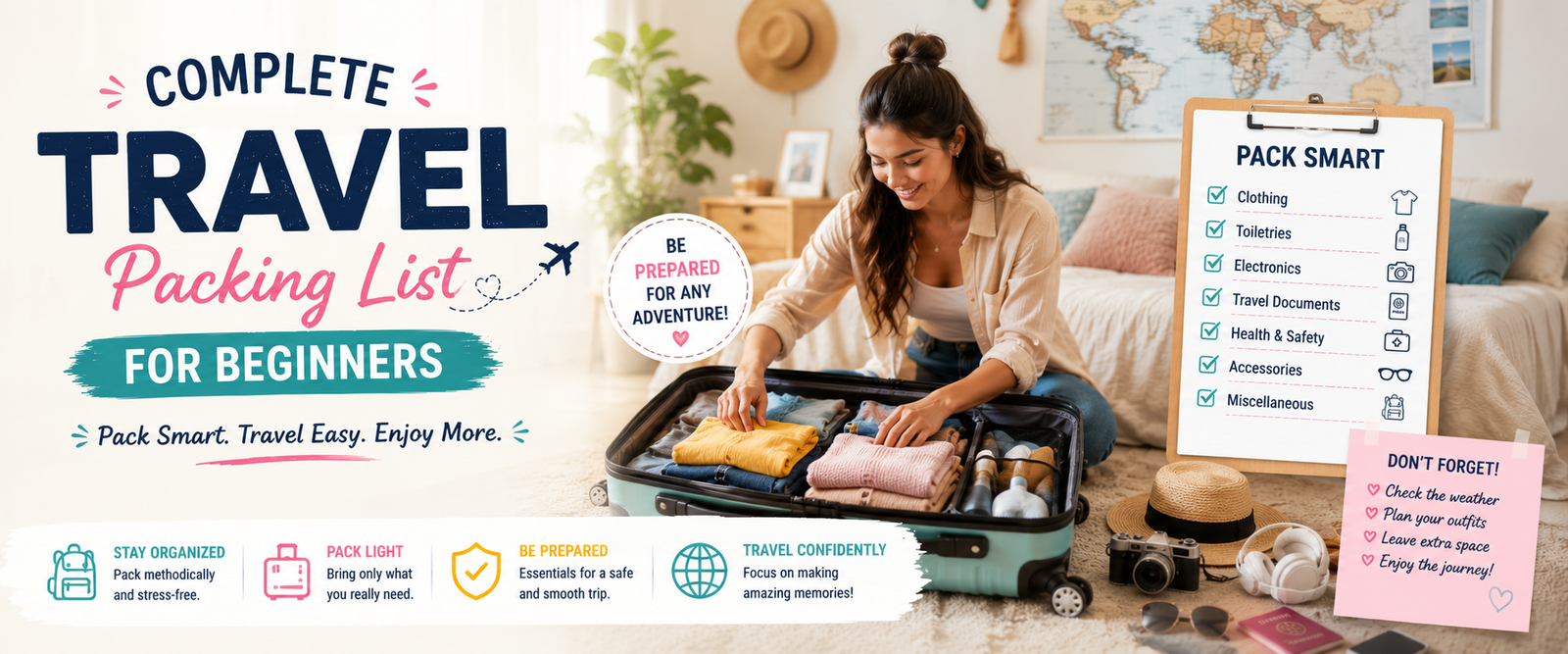
The Complete Travel Packing Guide for Beginners: How to Pack Smart, Not Heavy (2026 Edition)
I still remember my first “real” trip. I was twenty-two, ridiculously excited, and completely convinced that packing was the easy part. I mean, how hard could it be to throw some clothes in a bag? Famous last words.
I showed up at the airport with a suitcase so heavy I could barely lift it onto the scale, three pairs of shoes I never touched, a hair straightener for a beach trip (don’t ask), and — here’s the kicker — no phone charger. I spent half my trip in flip-flops because my “comfortable walking shoes” turned out to be neither comfortable nor broken in, and I paid an embarrassing amount of money at a convenience store abroad just to charge my phone for one night.
That trip taught me something every seasoned traveler already knows: packing isn’t about bringing everything you might need. It’s about bringing exactly what you’ll actually use, in a way that keeps you light, organized, and ready for whatever the trip throws at you.
If you’re new to traveling — or you’ve traveled before but always feel like you’re either overpacking or missing something crucial — this guide is for you. I’m going to walk you through everything, step by step, the way I wish someone had walked me through it before that first disastrous suitcase-drag through the airport. By the end, you’ll have a packing system you can reuse for every trip, whether it’s a weekend getaway or a three-week adventure across a new continent.
Let’s get into it.
Why Bother With a Packing List At All?
I get it. Packing lists can feel like overkill, especially if you’re the “I’ll just wing it” type. But here’s the thing — winging it usually means one of two outcomes: you either pack way too much and spend your trip lugging around a suitcase that weighs more than your carry-on allowance, or you forget something important and end up scrambling to find it (and paying tourist prices for it) once you’ve already landed.
A good packing list does a few things really well:
- It takes the stress out of the process. When you have a system, you’re not standing in your room at midnight before a 6 a.m. flight, staring blankly into your closet.
- It saves you money. Toothpaste, sunscreen, chargers — these things cost triple at airports, hotel gift shops, and tourist traps. Pack it right the first time and skip the markup.
- It keeps you mobile. Nobody enjoys hauling a fifty-pound suitcase up three flights of stairs in a hotel with no elevator. Trust me on this one.
- It prevents the classic “I forgot my charger” panic. Because that panic is real, and it always seems to happen at the worst possible time.
Basically, a packing list is like a quiet, reliable travel companion. It doesn’t complain, it doesn’t get lost, and it always has your back.
Step 1: Figure Out What Kind of Trip You’re Actually Taking
Before you even think about what to put in your bag, stop and think about the trip itself. This sounds obvious, but it’s the step most beginners skip — and it’s the reason so many people end up packing the wrong things entirely.
Ask yourself a few honest questions:
- How many days am I actually going to be away?
- Am I staying in the country, or am I crossing a border?
- What’s the weather actually going to be like — not what I hope it’ll be, but what it will realistically be?
- Are there any weddings, dinners, hikes, or other specific events on the itinerary?
- What am I actually going to be doing most days — sightseeing, relaxing, working, hiking?
Your answers should shape everything that follows. A business trip calls for blazers and a laptop bag, not hiking boots. A beach vacation calls for swimwear and sunscreen, not three formal outfits you’ll never wear. A mountain trip calls for warm layers and sturdy boots, not sandals.
It sounds simple, almost too simple to write down. But I promise you, the number one reason people overpack (or underpack) is that they never actually stopped to define the trip before they started throwing things into a suitcase. Give yourself five minutes to think this through before you touch a single sock, and the rest of the process becomes ten times easier.
Step 2: Get Your Documents Sorted First
Of everything on this list, your documents are the one category where there’s genuinely zero room for error. You can buy a forgotten toothbrush anywhere. You cannot buy a forgotten passport.
Here’s what you’ll want to have on hand, depending on your trip:
- Your passport, if you’re heading abroad
- A visa, if your destination requires one
- Some form of government ID — a driver’s license or national ID card
- Your tickets, whether that’s a flight, train, or bus — and I’d recommend having both a digital copy and a printed backup
- Hotel or accommodation confirmations
- Travel insurance details
- A short list of emergency contacts, just in case
A few habits that will save you a massive headache down the line:
Keep digital copies of everything — scan or photograph your passport, ID, and tickets, and email them to yourself or store them in a cloud folder you can access from anywhere. Consider getting a small document organizer pouch so everything lives in one place instead of scattered across three different bags. And it never hurts to carry two or three photocopies of your most important documents, tucked away separately from the originals. If your bag ever gets lost or your wallet gets stolen, having a backup can turn a nightmare scenario into a minor inconvenience.
And please — for the love of smooth travel — never pack these in your checked luggage. Keep them on your person or in your carry-on at all times.
Step 3: Clothing — The Category Where Most People Go Wrong
Clothing is where beginners almost universally overpack. It’s understandable — you want to be prepared for anything, so you throw in “just in case” outfits, extra shoes, a jacket for weather that probably won’t happen. But this is exactly the category where a little discipline goes the longest way.
The golden rule here is simple: pack versatile, layerable pieces that can mix and match with each other. If every top can pair with every bottom, you’ve just cut your suitcase weight in half without sacrificing a single outfit option.
For a typical five-to-seven-day trip, here’s a solid baseline to work from:
Tops: Three to five T-shirts or casual shirts, plus one or two formal shirts if your trip calls for it.
Bottoms: Two to three pairs of jeans or trousers, along with one comfortable pair of joggers or travel pants for long transit days.
Innerwear: Five to seven pairs of underwear and two to three pairs of socks. This is one area where I’d actually recommend not skimping — clean underwear is not the place to test your minimalist packing philosophy.
Outerwear: One light jacket or hoodie for cooler evenings, and a heavier jacket if you’re heading somewhere genuinely cold.
Sleepwear: One or two sets, depending on trip length.
Special items: Swimwear if there’s any chance of a pool or beach, traditional or formal wear if you have a specific event, and gym clothes if you’re the type who’ll actually use a hotel gym (be honest with yourself here).
A few packing habits that make a real difference:
Roll your clothes instead of folding them. It genuinely saves space, and it also tends to reduce wrinkles. If you want to level up, invest in packing cubes — they keep your bag organized and make it so much easier to find things without turning your suitcase into chaos halfway through the trip. Stick to a neutral color palette so everything mixes and matches easily, and resist the urge to pack “just in case” outfits. If you haven’t worn something in the last few trips, you probably won’t wear it on this one either.
Step 4: Footwear — Choose Wisely, Because Shoes Are Space Hogs
Shoes are sneaky. They don’t look like much individually, but they eat up an enormous amount of suitcase real estate, and they’re heavy. This is one area where “less is more” really pays off.
A solid footwear lineup for most trips looks something like this:
- One pair of genuinely comfortable walking shoes — and I mean actually broken in, not fresh out of the box
- One pair of casual sandals or slip-ons for easy days
- One pair of formal shoes, only if your trip actually requires them
A couple of tricks that seasoned travelers swear by: wear your bulkiest pair of shoes while you’re actually traveling, rather than packing them. This alone can free up a surprising amount of suitcase space. And if you’re worried about your shoes getting your clean clothes dirty, a simple shoe bag keeps everything separated and tidy.
Step 5: Toiletries — Where Beginners Almost Always Overpack
I’ll be honest, this is the category that got me on that disastrous first trip. I packed like I was moving into a new apartment rather than going away for a week. Full-size shampoo bottles, an entire skincare routine, backup deodorant — none of it necessary.
Here’s a leaner, smarter approach:
Toothbrush and toothpaste, a facial cleanser, travel-sized shampoo, soap or body wash, deodorant, moisturizer, and sunscreen — which I cannot stress enough is one of the most overlooked essentials on any trip, sunny destination or not. Round it out with a razor or trimmer and a comb or brush.
If you need makeup, keep it minimal rather than bringing your entire collection, and don’t forget sanitary products if you might need them.
A few habits worth adopting: use leak-proof travel bottles so your bag doesn’t turn into a shampoo disaster zone somewhere over the Atlantic. Keep liquids in a clear zip-lock bag, both for organization and because most airlines will require this anyway. And if you’re flying, double-check the liquid restrictions for your airline before you pack, so you’re not caught off guard at security.
Step 6: Electronics and Gadgets
We live in a world where a dead phone battery can genuinely derail a day of travel, so this category deserves real thought.
The non-negotiables: your smartphone, its charger, a power bank for those long travel days when outlets are scarce, and a decent pair of earphones or headphones.
Worth considering, depending on your trip: a laptop or tablet if you need to work or just want entertainment, a camera if photography matters to you, a smartwatch, or an e-reader if you’re someone who likes to read on the go without the bulk of physical books.
And don’t forget the small stuff that’s easy to overlook until you need it: a universal travel adapter if you’re going abroad, a couple of extra charging cables (because cables have a mysterious way of disappearing), and a small USB hub if you’re traveling with multiple devices that all need power at once.
Step 7: Health and Safety — Don’t Skip This Section
This is the category people love to skip, right up until they need something from it at 2 a.m. in an unfamiliar city. Don’t be that person.
Basic medical kit: any prescription medicines you take regularly, pain relievers, something for colds or fevers, band-aids, antiseptic cream, and oral rehydration salts if you’re heading somewhere the food or water might not agree with you.
Safety essentials: hand sanitizer, a few face masks (not strictly necessary everywhere anymore, but genuinely useful to have), wet wipes, and insect repellent if you’re heading somewhere with mosquitoes or other biting insects.
None of this takes up much space, and all of it can save you a miserable, expensive scramble to find a pharmacy in a country where you don’t speak the language.
Step 8: The Comfort Items Nobody Talks About Enough
There’s a category of packing that doesn’t get discussed as much as documents or clothing, but it makes a genuinely enormous difference to how enjoyable your trip actually feels: comfort.
A neck pillow and an eye mask can be the difference between arriving at your destination rested or arriving like a zombie. A travel blanket is a small luxury on long journeys, especially on planes or overnight buses where the air conditioning always seems to be set to arctic. A reusable water bottle saves you money and cuts down on plastic waste, and it’s one of those items you’ll reach for constantly once you have it. And a small stash of snacks — protein bars, nuts, whatever you like — has saved me more than once from being stuck hungry with nothing but overpriced airport food as an option.
Step 9: Bags and Storage — The Unsung Hero of Good Packing
People obsess over what to pack, but they often give almost no thought to how they’re packing it. The right bag setup can make or break your entire trip experience.
At a minimum, you’ll want your main luggage — a backpack or suitcase depending on your travel style — a smaller daypack for daily outings so you’re not lugging your whole suitcase around a city, and a crossbody bag or similar for keeping your valuables close and secure.
Inside those bags, a little organization goes a long way. Packing cubes keep your clothes sorted by category so you’re not digging through a jumbled mess every morning. A small laundry bag keeps your worn clothes separate from your clean ones. Zip-lock bags are endlessly useful — for liquids, for keeping small items together, for protecting your phone if you’re headed somewhere rainy. And shoe bags, as mentioned earlier, keep your shoes from getting the rest of your bag dirty.
Step 10: Money and Financial Essentials
Money management while traveling is its own small art form, and it’s worth thinking through before you leave rather than figuring it out on the fly.
Bring some local currency in cash for situations where cards aren’t accepted, along with your regular debit or credit cards, and a forex card if you’re traveling internationally and want a convenient way to manage foreign currency.
A few habits worth building: split your money across a couple of different places — your wallet, your bag, maybe a hidden pocket — so a single lost or stolen item doesn’t leave you completely stranded. Let your bank know you’ll be traveling, especially internationally, so they don’t flag your card for suspicious activity right when you need it most. And avoid carrying large amounts of cash around; it’s simply not worth the risk when cards and digital payments are accepted almost everywhere these days.
Step 11: Packing for the Weather You’re Actually Going To
Weather-specific packing is where a lot of trips go sideways, mostly because people pack for the weather they wish they were getting rather than the weather they’re actually going to get. Check the forecast, and check it again closer to your departure date, because forecasts shift.
Cold weather calls for thermal wear, woolen socks, gloves, a beanie, and a genuinely heavy jacket — not a “fashion jacket” that looks warm but isn’t.
Hot weather calls for light, breathable cotton clothing, sunglasses, a hat or cap, and — you guessed it — more sunscreen.
Rainy destinations call for a raincoat or poncho, waterproof shoes, and a compact umbrella that won’t take up much space but will save you from a miserable, soggy day out.
Step 12: The Habits That Separate Beginners From Experienced Travelers
Once you’ve got the categories down, there are a handful of habits that genuinely change how your packing — and your whole trip — feels.
Follow the 80% rule. Pack your bag so it’s only about 80% full, leaving room for anything you pick up along the way. Nothing is more frustrating than falling in love with a souvenir and realizing you have nowhere to put it.
Pack by outfit, not by item. Instead of grabbing a pile of tops and a pile of bottoms separately, actually plan out your outfits in advance. It sounds tedious, but it stops you from packing random pieces that don’t go with anything else in your bag.
Use travel-sized products wherever possible. It’s a small thing, but it adds up to real space and weight savings.
Keep your true essentials in your carry-on, always. Documents, money, electronics, and one full spare outfit should never leave your side, especially on flights. If your checked bag gets delayed or lost, you’ll still have what you need to function until it catches up with you.
Weigh your bag before you leave the house. A cheap luggage scale is one of the best travel investments you can make. Nothing ruins the start of a trip like an unexpected overweight baggage fee at the check-in counter.
Step 13: The Mistakes Almost Every Beginner Makes
I’ve made most of these myself, so consider this a list written from experience rather than judgment.
Overpacking clothes is the most common one by far — everyone thinks they’ll wear more outfits than they actually do. Forgetting chargers is a close second; it’s such a small item that it’s easy to overlook until your phone is at 3% in an unfamiliar city. Not checking the weather forecast before packing leads to a lot of unnecessary bulk or, worse, being genuinely unprepared. Carrying full-size toiletries instead of travel sizes wastes space and often runs afoul of airline liquid rules. And packing valuables — documents, electronics, jewelry — in checked luggage is a risk that’s just never worth taking.
Avoid these five mistakes, and you’ll already be ahead of most first-time travelers.
Step 14: If You Want to Go Full Minimalist
Once you’ve got a few trips under your belt, you might want to try packing like the seasoned minimalist travelers you see gliding through airports with nothing but a single carry-on. It’s absolutely achievable, and it starts with a few shifts in mindset.
Choose multi-purpose items wherever you can — a scarf that doubles as a blanket, a jacket that works for both daytime and evening. Limit yourself to two pairs of shoes, no matter how tempting a third pair feels. Stick to a single color theme so literally everything in your bag mixes and matches. Get comfortable reusing and re-wearing clothes rather than treating every day as a fresh outfit. And on longer trips, plan to wash clothes partway through rather than packing enough for every single day — most accommodations have laundry facilities, or there’s often a laundromat nearby.
Step 15: A Quick-Reference Checklist You Can Screenshot
If you want something fast and simple to glance at while you’re actually packing, here’s a condensed version of everything above:
Documents: Passport, tickets, ID proof
Clothes: A handful of T-shirts, a couple of pairs of pants, innerwear, a jacket
Toiletries: Toothbrush, shampoo, sunscreen
Electronics: Phone, charger, power bank
Health: Medicines, sanitizer
Extras: Snacks, water bottle
It’s not exhaustive, but it covers the essentials that trip people up the most when they’re rushing out the door.
Final Thoughts
Packing doesn’t have to be the stressful, last-minute scramble it so often turns into. Once you understand what your trip actually needs — rather than what you’re anxious you might need — the whole process becomes second nature. The goal was never to pack everything. It’s to pack smart.
As a beginner, you’re going to learn something new with every single trip you take. Maybe you’ll realize you never once touched that extra jacket, or that you really wish you’d brought a second pair of socks. That’s normal. That’s actually how you build a packing system that genuinely works for you, rather than one copied from a blog post (even this one).
So the next time you’re staring at an empty suitcase, use this guide as your starting point — and then tweak it, trip by trip, until it fits exactly how you travel.
One last thing: your first trip probably won’t be perfectly packed, and that’s completely fine. I forgot a charger. You might forget something else entirely. Forgetting a thing or two is just part of the experience — and honestly, some of my favorite travel stories came from the things that went a little wrong. What matters most, at the end of the day, is that you actually go, and that you enjoy the journey once you get there.